Your phone dies at a festival at the worst possible time. It is always the worst possible time — when you are trying to find your group in a crowd, when the set you have been waiting for all weekend is about to start, when you need the map to get back to your campsite at 1am. A dead phone at a festival is one of the most reliably miserable experiences available, and it is almost entirely preventable.
This guide covers how to keep your phone charged through a full festival day, what portable charger to buy, and how to stretch your battery when charging is not immediately available.
Why Festival Phone Battery Drain Is So Much Worse
Understanding why your phone drains faster at a festival than in everyday life helps you manage it more effectively.
GPS and mapping are battery intensive. Festival navigation apps constantly poll your GPS hardware, which is one of the higher-drain functions a smartphone performs. People use maps significantly more at festivals than in normal life.
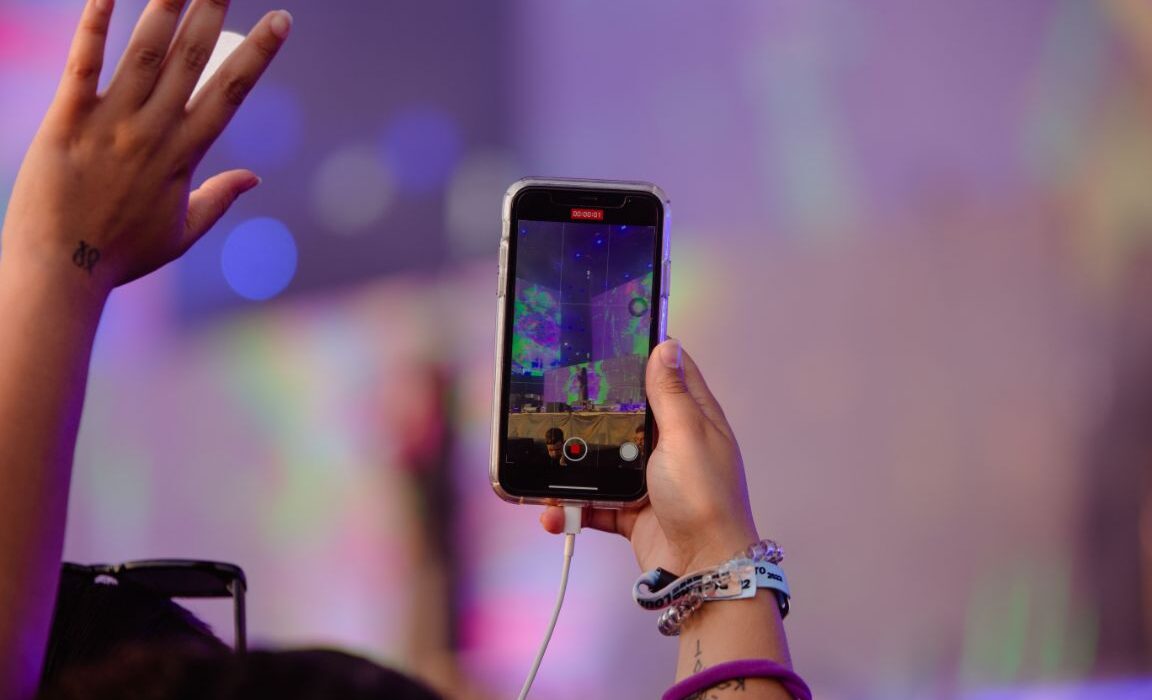
Photography is a major drain. The camera app is power-hungry, and most people take significantly more photographs and videos at a festival than in a typical day.
Cellular network strain. Festival grounds concentrate tens of thousands of people in a small area, all competing for the same cellular network capacity. When your phone struggles to maintain a connection to an overloaded network, it uses more power trying to stay connected than it uses on a clean signal.
Cold temperatures drain batteries faster. Overnight cold at camping festivals drives lithium-ion battery performance down significantly. A phone at 50 percent charge can drop to 20 percent by morning without being used at all if it was exposed to cold.
Screen brightness in outdoor sun. In bright outdoor conditions, most people increase screen brightness to maximum to see the display clearly, which is one of the highest-drain display settings available.
Choosing a Portable Charger
A quality portable charger is the most important tech investment for festival attendance. The relevant specifications are capacity, output speed, size, and number of charges available per cycle.
Capacity
Portable charger capacity is measured in milliamp hours (mAh). A typical modern smartphone has a battery of around 3,000 to 5,000 mAh. A portable charger with 10,000 mAh provides approximately two full charges for a standard smartphone battery after accounting for efficiency loss in the transfer.
For a single-day festival, a 10,000 mAh charger is generally sufficient. For a multi-day camping festival where you cannot charge the portable charger overnight, a 20,000 or 26,800 mAh charger provides four to five phone charges and carries you through the event without requiring a top-up.
Output speed
The charging speed your portable charger delivers is determined by its output specification. Standard output (5W or 10W) charges a modern phone fully in around three hours. Fast charging output (18W, 20W, or higher) reduces this to one hour or less.
At a festival where you are using your phone simultaneously while charging from a portable charger, a higher-output charger is worth the premium because it replenishes battery faster than you drain it.
Size and weight
Portable charger capacity and size are broadly proportional. A 26,800 mAh charger is heavier and larger than a 10,000 mAh charger. For festivals with a clear bag policy where bag space is at a premium, a higher-capacity smaller form factor is worth paying more for.
Number of ports
A portable charger with two USB-A or USB-C output ports allows simultaneous charging of two devices — your phone and a friend’s phone, or your phone and a camera.
Charging Strategy Throughout the Day
Having a portable charger is not sufficient on its own — using it strategically extends its effectiveness significantly.
Start the festival day at 100 percent on both devices. Charge your phone to full before leaving your accommodation or campsite each morning. Charge your portable charger to full each night when you have access to power.
Connect the portable charger at 30 to 40 percent, not at 10 percent. Below 20 percent, most phones enter power management mode. Connecting the charger earlier and charging while you use the phone is more effective than waiting until you are nearly depleted.
Keep the portable charger immediately accessible. A charger you have to dig for is one you delay using. Having it in a pocket or accessible pouch means you connect it earlier and maintain higher battery levels throughout the day.
Battery Saving Strategies
Reducing your phone’s battery drain extends the time between charges and makes your portable charger go further.
Reduce screen brightness. The single most effective battery saving action available. In bright outdoor conditions, 50 to 70 percent brightness is usually sufficient for clear viewing.
Turn off WiFi. In a festival environment, your phone’s WiFi antenna continuously scans for networks that are not available or too congested to be useful. Turning WiFi off eliminates a continuous background drain without affecting cellular connectivity.
Enable aeroplane mode during performances. During a set where you are fully engaged and do not need to contact anyone, enabling aeroplane mode reduces drain dramatically. Even a 30-minute aeroplane mode break recovers meaningful battery.
Set location services to only when in use. Many apps with location access run GPS polling in the background. Setting location access to “while using the app” rather than “always” for non-essential apps reduces this drain significantly.
Use low power mode proactively. Enable it at 40 to 50 percent rather than waiting for your phone to prompt you at 20 percent. Most smartphones apply a useful set of optimisations automatically in low power mode that collectively extend battery life.
Festival Charging Stations
Many major festivals provide phone charging stations on the grounds. These allow you to connect your phone to a shared charging point, sometimes with a locker arrangement where you leave the phone charging and retrieve it later.
The case for using them: They provide power from the grid rather than your portable charger, preserving your charger capacity for later in the day.
The case against: Leaving your phone unattended at a public charging station at a festival is a genuine security risk. Shared charging cables at public stations can in rare cases be used to transfer data as well as power. Queue times at popular charging stations during peak hours can be significant.
The practical approach: Use festival charging stations during quieter periods of the day when you are nearby anyway and the queue is short. Never leave your phone unattended at a public station. Use your own portable charger as the primary charging solution throughout the day.
Protecting Your Phone From Festival Conditions
A waterproof case or waterproof phone bag protects against rain at UK and European festivals and spilled drinks at all festivals everywhere.
Keep your phone in an inside pocket rather than a back pocket or easily accessible outer pocket in dense crowds.
A screen protector prevents the scratch damage that comes from the inevitable drops of a festival environment.
For camping festivals in cold temperatures: Keep your phone inside your sleeping bag overnight rather than leaving it outside. Lithium-ion batteries lose capacity quickly in cold and recover once they warm up — preventing the cold exposure prevents the capacity loss.
FAQ
What is the best portable charger for a festival?
A 20,000 mAh charger with at least 18W fast charging output is the right specification for most festival use. The Anker PowerCore series, the Belkin Boost Charge Pro, and the Zendure SuperMini are well-regarded options across different capacity levels. For single-day events, the Anker 523 at 10,000 mAh offers a good combination of capacity, speed, and compact form factor.
How many times can a 20,000 mAh portable charger charge my phone?
A 20,000 mAh charger delivers approximately 14,000 to 16,000 mAh to your phone after accounting for the efficiency loss in the charging process. For a phone with a 4,500 mAh battery, this represents approximately three to three and a half full charges.
Can I bring a portable charger on a flight to a festival?
Yes, within TSA and airline restrictions that apply to lithium-ion batteries in carry-on luggage. Portable chargers must be carried in your carry-on bag, not checked luggage. Most airlines permit chargers up to 100 Wh without special approval. A 26,800 mAh portable charger at standard voltage is below the 100 Wh limit. Check the specific airline’s rules before travelling.
Does wireless charging work well at a festival?
Wireless charging is convenient for overnight charging when you have time but less practical during a festival day because it requires your phone to remain stationary on the charging pad. The efficiency of wireless charging is also lower than wired charging. Wired charging from a portable charger is the more practical festival solution.
Should I bring a backup phone to a festival?
An inexpensive secondary phone with a SIM card is a legitimate option for people who attend multi-day camping festivals regularly. The secondary phone stays charging at camp while you carry your primary phone to the festival grounds, and the camp phone serves as a communication device for reaching people at the campsite if your primary phone dies. Not necessary for most people but a genuinely useful strategy for those who find phone battery management a significant source of anxiety at festivals.