
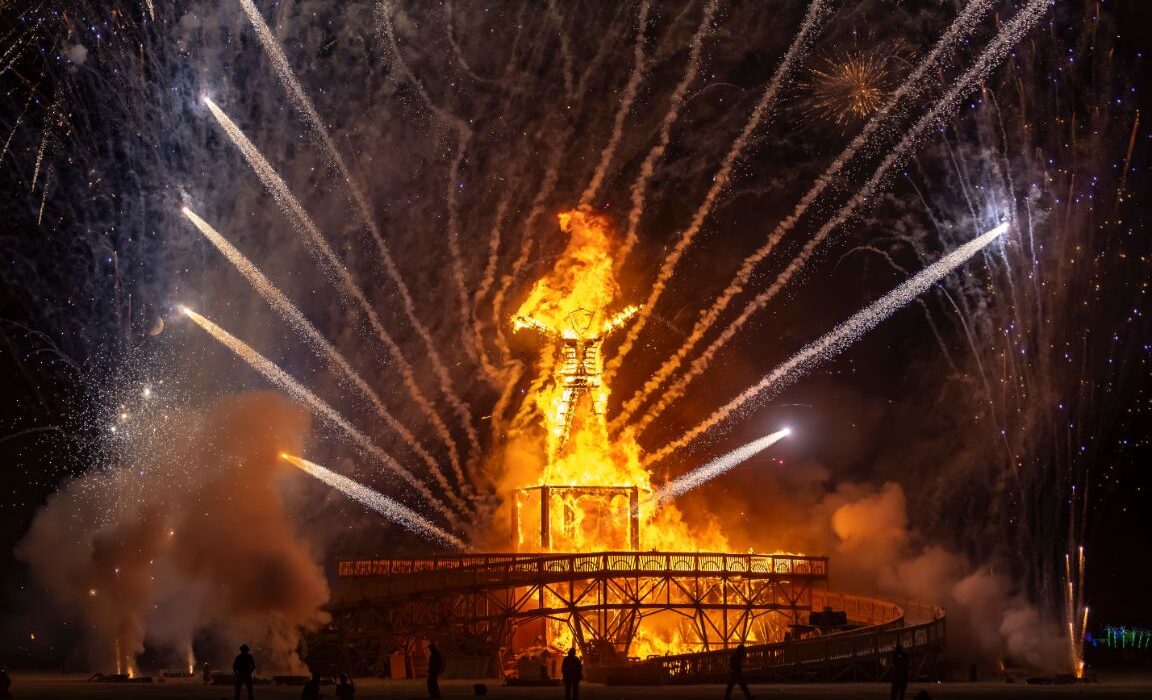
Burning Man is one of the most talked-about and least understood events in the United States. Most people who have not attended have a vague impression of it as either a billionaire tech playground or a desert rave for people who own too many feather boas. Both impressions miss what it actually is.
Burning Man is a temporary city. For one week in late August, around 70,000 people build and inhabit a radial city called Black Rock City on the flat alkali playa of the Black Rock Desert in northern Nevada, approximately 100 miles north of Reno. The city has streets, camps, art installations, music venues, community centers, cafes, medical facilities, and a post office. It is governed by ten principles — radical inclusion, gifting, decommodification, radical self-reliance, radical self-expression, communal effort, civic responsibility, leaving no trace, participation, and immediacy — that define the culture and expectations of everyone who attends.
There is no lineup. There are no performers booked to play specific stages at specific times. There is no food for sale. Almost nothing is for sale at all. There are no spectators. Everyone who attends is expected to participate — to contribute something, whether that is art, music, a theme camp with an offering, or simply the presence of a person who shows up and engages genuinely with what is around them.
If you are planning your first burn, this guide covers what you need to know before you go.
What Burning Man Actually Is
Understanding the ten principles before you arrive changes the experience significantly. They are not suggestions or aspirational values. They are the operating system of the event, and understanding them helps make sense of what you encounter.
Decommodification means almost nothing is for sale at Burning Man. The two exceptions are ice, available from Center Camp, and coffee at Center Camp Cafe. Everything else operates on a gift economy — camps offer food, drinks, experiences, massages, art, music, workshops, and activities freely, with no expectation of exchange. You give what you have to give, and you receive what is offered. This is genuinely disorienting the first time you encounter it and genuinely transformative by the end of the week.
Radical self-reliance means you are responsible for your own survival. You bring everything you need to eat, drink, and shelter for the full duration of your stay, plus extra for emergencies. The desert will not support you. The event infrastructure is not there to supply you. You arrive prepared or you struggle.
Leave no trace means the playa must be returned to its original condition. Every piece of matter you bring in must leave with you. This applies to ash from your camp fire, to the piece of tinsel that blew off your costume, to the nail you used to stake your tent. The playa condition after the event is measured and the community takes the obligation seriously.
Participation means you are a citizen of Black Rock City, not a visitor. You are expected to engage — with other people, with the art, with the camps, with whatever you have to offer. Burning Man actively does not work for people who try to experience it as consumers.
The Setting and the Conditions
The Black Rock Desert playa is one of the most extreme environments in the continental United States for a temporary city. Understanding the conditions before you arrive is not optional.
The heat during the day is intense. Temperatures regularly exceed 100 degrees Fahrenheit in late August. The playa surface absorbs and radiates heat in ways that make the felt temperature higher than the air temperature. Direct sun exposure without adequate protection causes heat exhaustion rapidly.
The cold at night is equally severe. Temperatures drop into the 40s and sometimes the 30s Fahrenheit after dark. The same day that is brutally hot at 2pm is genuinely cold at 4am. Many first-timers fail to bring adequate warm layers and suffer for it.
The dust is the defining physical characteristic of the playa. Playa dust is extremely fine alkaline silt that gets into everything — your lungs, your eyes, your electronics, your food, your sleeping bag, your soul. Dust storms, called whiteouts, reduce visibility to near zero and arrive without warning. A dust mask or respirator and goggles are not optional accessories. They are safety equipment.
The wind can be fierce and can arrive suddenly. Structures, shelters, and any unsecured item must be engineered for wind load. First-timers regularly lose tents, shade structures, and possessions to the playa wind.
How to Get Tickets
Burning Man tickets are sold through a lottery and direct sale system managed on the Burning Man website. The process opens in the autumn before the following year’s event and the timeline is published on the official site each year.
The main sale tickets sell out. There are subsequent sales including a lower-income ticket sale and a directed group sale for registered theme camps and art installations. The secondary market exists but the official channels are the starting point, and planning ahead by at least six months is necessary for reliable access.
Tickets are registered to the person who purchases them and require ID verification at the gate. They are not transferable to others and the resale of tickets above face value is strongly discouraged by the community.
Getting There
Black Rock City is approximately 100 miles north of Reno, Nevada. The drive from Reno takes two to four hours depending on traffic conditions at the gate. Arriving during peak entry periods, particularly Thursday and Friday before the official Monday open, involves extended waits in the gate queue that can last several hours.
Arriving on Saturday or Sunday before the event opens tends to mean shorter gate queues. Arriving on the day before the official start or on opening day itself during peak afternoon hours means the longest possible waits.
Most people drive or are driven. Carpooling is strongly encouraged both for environmental reasons and because parking at the event is limited. The Burner Express bus service from Reno is the alternative to driving and is a reliable option for people who do not have access to a vehicle capable of carrying the substantial amount of gear required.
The vehicle matter: The playa conditions are genuinely hard on cars. Dust penetrates engines, brakes, and mechanical systems. A car that drives into Black Rock City will leave significantly dustier and somewhat more worn than when it arrived. Older vehicles that you do not mind exposing to harsh conditions are preferable to new cars.
What to Bring — The Essential List
Burning Man requires you to be more prepared than almost any other event you will attend. The following is not a complete packing list but covers the essentials that first-timers most commonly under-prepare for.
Water
The standard recommendation is one and a half gallons of water per person per day. For a seven-day event, that is a minimum of ten gallons per person. Err on the side of more. Dehydration is the most common medical issue at Burning Man and most cases are preventable with adequate water intake. Electrolyte supplements are equally important — drinking large amounts of water without electrolyte replacement depletes sodium and causes hyponatremia, which is a genuine medical emergency.
Food
You bring all your own food. Camp cooking is the norm and the playa conditions require food storage that is sealed, dust-proof, and cooler-accessible. Hard-sided coolers with secure lids work significantly better than soft coolers in the dust. Plan meals in advance and account for the fact that cooking in extreme heat is less appealing than anticipated — simple, high-energy foods that require minimal preparation are more reliably eaten than elaborate camp cooking plans.
Shelter
Your camp is your home for the week and its quality significantly affects your experience. A tent is the minimum. A shade structure over the tent dramatically improves livability by reducing interior temperatures during the day. A shaded sleeping environment is the difference between sleeping through the heat of the day to recover from a long night and lying awake in an oven.
RVs and camper vans eliminate most of the shelter challenge and are popular among experienced attendees for good reason. The rental cost of an RV specifically for Burning Man is a significant expense but one that many people find worthwhile for the improved sleep and recovery it enables.
Dust protection
A quality dust mask or N95 respirator for dust storms. Goggles that seal against the face for whiteouts. A bandana as a secondary option when conditions are mild. All of your electronics in sealed zip-lock bags or hard cases. All of your food in sealed hard-sided containers. A cover for your bicycle that prevents the drivetrain from being coated in playa dust.
Lighting
After dark, every person on the playa is required to be lit. This is a safety requirement because bicycles move at speed through the playa at night and an unlit pedestrian is genuinely dangerous. LED strips on your costume, a headlamp, EL wire, or any combination of lighting that makes you visible from a distance are required, not optional. People who ignore this requirement are known as darkwads and are genuinely a hazard.
A bicycle
A bicycle is effectively required for getting around Black Rock City. The city is a mile and a half across. Art installations, theme camps, and the deep playa are spread across the full area. Walking everywhere is exhausting and time-consuming. Every bicycle brought to Burning Man should be a cheap, expendable one — either purchased from a thrift store before the event or rented from a Burning Man bicycle rental service in Reno. Playa dust will damage the drivetrain significantly over the course of the week.
What to Wear
Burning Man costume culture is one of the most creative expressions of personal identity available at any event anywhere. The guidance on what to wear operates across two simultaneous requirements: expressing yourself visually and dressing for survival in an extreme desert environment.
The practical framework
Daytime: Full coverage of skin to prevent sunburn and reduce heat absorption. Loose, light-colored, breathable natural fabrics that cover your arms and legs. A wide-brim hat. Sunglasses or goggles. Sunscreen on any exposed skin. Many experienced burners wear light linen or cotton coverups that look like festival fashion but are genuinely functional as sun protection.
Nighttime: Multiple warm layers available. The temperature drop after sunset is rapid and significant. A fur coat — one of the most iconic Burning Man visual elements — is not purely aesthetic. It is genuinely warm and the playa cold makes it functional. A good warm jacket, thermal layers, and the ability to add coverage quickly as temperatures drop are survival requirements as much as fashion choices.
Footwear: The playa surface is hard, flat, and alkaline. Playa dust is caustic and dries out skin. Closed shoes are preferable to sandals for most of the event because the dust between your toes causes cracking and irritation over the course of the week. Whatever you wear, apply a foot lotion every day to counteract the drying effect of the alkaline dust.
The expressive dimension
Beyond the practical requirements, Burning Man costume culture encourages the most creative, theatrical, and personally expressive dressing you will find anywhere. The culture rewards genuine expression over purchasing a costume. A carefully assembled set of clothing from thrift stores that reflects something real about who you are is valued more than an expensive purchased costume. Elaborate handmade constructions that took weeks to build are the gold standard.
The cultural principle of radical self-expression applies here. Wear what is genuinely you, not what you think is expected of a Burning Man attendee. The event has enough fur and goggles and steampunk corsets. The most interesting thing you can bring is something that is actually yours.
Theme Camps and What to Expect
Theme camps are the social infrastructure of Black Rock City. They range from small friend groups with a shared aesthetic to enormous operations with bars, restaurants, concert stages, and community programming that rival established venues.
Most of the organized social activity at Burning Man happens through theme camps. The Burning Man app — or the printed What Where When guide available at the event — lists all registered camps with their locations, offerings, and programming schedules. Before you go, browse the camp listings and identify places you want to visit. This is not a complete itinerary but a set of intentions that give your first few days some structure while you get oriented.
As a first-timer, accepting what camps offer and engaging genuinely with their programming is the right approach. The gifting culture operates through genuine exchange — a camp that offers you a meal or a drink is not looking for payment but for participation in the community they have created.
The Art
The large-scale art installations on the deep playa are among the most extraordinary things available to see at any event anywhere in the world. Artists apply months or years in advance for grants from the Burning Man organization to build temporary structures — some the scale of buildings — that are designed to be experienced on the playa and, in most cases, burned during the event.
The Man himself, the central structure for which the event is named, is burned on Saturday night. The Temple, a structure that carries an entirely different emotional weight from the Man, is burned on Sunday. The Temple burning is one of the quietest and most moving experiences the event produces — thousands of people standing in silence around a burning structure to which many of them have attached objects and written notes representing grief, loss, and things they needed to release.
Go to the Temple. Spend time there before it burns. It is one of the most singular experiences the event has to offer.
Practical Survival Tips
MOOP as you go. MOOP is Matter Out Of Place — anything on the playa that is not playa. Pick up anything you drop immediately. Keep your camp free of debris. The leave-no-trace principle is enforced through social pressure and genuine community values, not by rules.
Sleep. Burning Man operates around the clock and the social pressure to stay up all night is significant. The people who have the best experiences are generally the ones who sleep enough to be genuinely present rather than depleted. Sleeping during the hottest part of the afternoon and being active from late afternoon through the early morning is the rhythm that works best for most people.
Drink water continuously, not just when thirsty. Thirst is a late indicator of dehydration in the heat. By the time you feel thirsty, you are already dehydrated. Carry water at all times and drink consistently throughout the day.
Protect your electronics. Your phone will be damaged by playa dust if it is not protected. A water-resistant or waterproof case, or a sealed bag, significantly extends the operational life of your phone through the event. Bring a backup battery specifically for your phone.
Sunscreen, every morning, everywhere. The playa at altitude in August produces UV exposure that burns significantly faster than most people expect.
FAQ
Do I need to be experienced with camping to attend Burning Man?
Camping experience is helpful but not strictly required. What is required is thorough preparation and the willingness to be genuinely self-reliant for the week. First-timers who attend with an experienced camp or group have a much smoother introduction than those who attempt it entirely alone and unprepared. Connecting with a camp that welcomes first-timers before the event is strongly recommended.
Is Burning Man safe?
The event has a substantial medical infrastructure, law enforcement presence, and community safety culture. The main risks are environmental — heat, cold, dust, and dehydration — all of which are manageable with adequate preparation. The social environment is generally safe and the community tends toward mutual care. Being aware of your own physical state and the conditions around you is the primary safety practice.
How much does Burning Man cost?
Ticket prices vary by tier but general admission tickets are typically in the $500 to $600 range for the main sale. Travel, gear, food, and water for a week add significantly to that. A first-time burner attending with their own vehicle and camping gear should budget at minimum $1,500 to $2,000 all in, and more if gear needs to be purchased. Theme camp membership sometimes includes communal food and resources that reduce individual costs.
Can I attend Burning Man without being part of a theme camp?
Yes, as an independent camper known as a DPW or solo camper. However, first-timers who attend independently without an established social network at the event often find the experience more challenging and less rewarding than those who arrive connected to a camp. Finding a theme camp that welcomes new members before the event significantly improves most people’s first experience.
Is Burning Man appropriate for families?
Burning Man has a family camping area and many families attend. The event’s extreme environmental conditions require significant additional preparation for children — shade, hydration, and rest are more critical for children than adults in the desert heat. The adult-oriented areas of the event are not appropriate for children, but families with appropriate preparation and camp support have genuinely positive experiences.