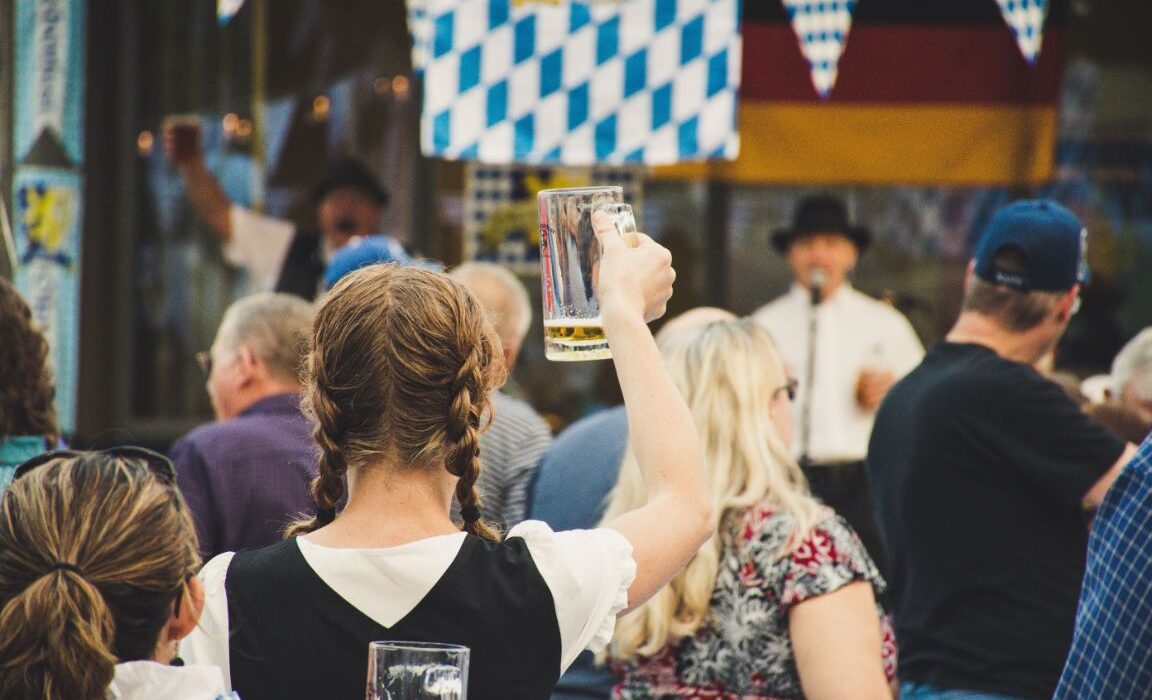
Oktoberfest in Munich is one of the most attended events in the world and one of the most misunderstood by first-time visitors, particularly Americans, who arrive expecting something resembling the Oktoberfest celebrations they may have attended at home. The original in Munich is a different experience in almost every way. It is larger, older, more structured, and more genuinely Bavarian than any American version can approximate.
This guide covers everything an American visitor needs to know before going to Oktoberfest in Munich.
What Oktoberfest Actually Is
Oktoberfest is a 16 to 18 day folk festival held annually on the Theresienwiese, a large open fairground in central Munich, running from late September through the first Sunday in October. It began in 1810 as a celebration of the marriage of Crown Prince Ludwig of Bavaria to Princess Therese of Saxony-Hildburghausen and has been held almost every year since, interrupted only by wars and disease outbreaks.
The modern Oktoberfest draws around 6 million visitors from around the world each year and serves approximately 7 million litres of beer across its duration. The beer is served exclusively in one-litre ceramic steins called Mass, and only beer brewed within Munich’s city limits by six specific Munich breweries is permitted to be served at the official festival.
The festival grounds include around 14 large beer tents operated by the Munich breweries, each seating several thousand people, alongside dozens of smaller tents, a full carnival fairground with rides, food stalls, souvenir vendors, and a substantial permanent infrastructure that makes it one of the world’s largest temporary cities.
Planning When to Go
The Oktoberfest season runs roughly from the third Saturday in September through the first Sunday in October, with the exact dates announced each year. The opening Saturday, when the Lord Mayor of Munich taps the first keg at noon with the traditional O’zapft is, is the most sought-after single day of the festival. It is also the most crowded.
First weekend: Most crowded, most festive, highest prices, tents fill fastest. Worth attending if you can get tent reservations and want the peak energy of opening weekend.
Mid-festival weekdays: Significantly less crowded than weekends, the tents are more accessible, and the atmosphere is more authentically local since the proportion of international visitors is lower. Weekday afternoons are the calmest period.
Final weekend: A second peak of attendance as visitors who could not make opening weekend attend the closing. Still crowded but with a festive end-of-season energy.
For first-time visitors with flexibility, a mid-festival weekday visit provides the most manageable introduction to the festival while still delivering the full Oktoberfest experience.
Securing a Tent Reservation
The large beer tents at Oktoberfest operate a reservation system for a portion of their seating, with the remainder available on a walk-in first-come basis. For weekends and particularly for opening weekend, a table reservation is practically essential for any group hoping to be seated.
Reservations are managed by the individual tent operators and must be booked directly through each tent’s own reservation system, which opens in late winter or early spring for the upcoming festival. The most popular tents, including the Hofbräu tent, the Augustiner tent, and the Hacker-Pschorr Festzelt, receive reservation requests far in excess of their availability.
Key points about tent reservations:
Reservations require a minimum spend commitment on food and drink per person, typically requiring the purchase of reservation vouchers redeemable at the tent. The voucher system ensures reserved tables are actually used. Weekend reservations go faster than weekday ones. Some tents have longer queues for reservations than others, and researching which tents have shorter waiting periods increases the probability of securing a spot.
For visitors who have not secured reservations, walk-in seating is available from the early morning on weekends and through much of the day on weekdays. Arriving at the Wiesn before 10am on weekends and before noon on weekdays gives the best probability of finding unreserved seating.
What to Wear
Dirndl and Lederhosen
Traditional Bavarian dress, the Dirndl for women and Lederhosen for men, is worn by a substantial proportion of Oktoberfest attendees, both local Bavarians and international visitors. Wearing traditional dress is not required but is strongly encouraged and makes the experience significantly more immersive. You will be welcomed more warmly at most tents in traditional dress than in street clothes, and the camaraderie with other traditionally dressed attendees is a real part of the experience.
The Dirndl is a dress consisting of a bodice, skirt, and blouse, with an apron whose bow direction carries a specific meaning. A bow tied on the left indicates single. A bow tied on the right indicates taken. A bow tied at the back indicates widowed. A bow tied at the front indicates a waitress. Most visitors tie the bow on the left regardless of status, but knowing the tradition is part of engaging with it properly.
Quality Dirndls range from affordable polyester festival versions available throughout Munich in September to genuine high-quality versions in wool, linen, or silk that cost several hundred euros and are made to last. For a one-time festival visit, a mid-range version in the 80 to 150 euro range from Munich’s department stores or festival shops offers reasonable quality without the investment of a traditional piece.
Lederhosen for men are leather breeches, either short (Kniebundhose) or knee-length (Bundhosen), worn with a checkered or white linen shirt, suspenders, and thick socks with leather shoes or boots. Quality ranges similarly from inexpensive festival versions to handmade genuine leather pieces that improve with age and are passed down through generations.
Practical clothing notes
Regardless of whether you wear traditional dress, dressing in comfortable, layered clothing is important. Oktoberfest days are long and the weather in late September and early October in Munich ranges from warm and sunny to cold and grey. The tents themselves are warm and crowded. The fairgrounds outside are exposed to the weather. Layers that can be managed through significant temperature changes are the practical requirement.
Comfortable, sturdy shoes or boots are essential. The tents involve standing on benches for extended periods, dancing, and a full day on your feet. Comfortable footwear makes an enormous difference to the experience.
What to Eat
The food at Oktoberfest is as important as the beer, and the range available beyond the obvious spit-roasted chicken and pretzels rewards deliberate exploration.
Hendl (roast chicken) is the most iconic Oktoberfest food and the most widely consumed. A half or whole roast chicken, split and cooked over open rotisseries in the tents, is eaten directly with the hands and is one of the best versions of roast chicken available anywhere.
Schweinshaxe (roast pork knuckle) is a Bavarian speciality that appears at Oktoberfest in versions that range from simply prepared to extraordinary. A properly prepared Schweinshaxe has crackling skin, tender meat, and a richness that requires little accompaniment beyond dark bread and mustard.
Steckerlfisch (grilled fish on a stick) is available from outdoor vendors throughout the festival grounds and is one of the underrated food experiences of Oktoberfest. Whole mackerel or other fish, seasoned and grilled over open charcoal, is eaten while walking and requires both hands.
Obatzda is a Bavarian cheese spread made from aged camembert blended with butter, onion, and paprika, served with radishes and fresh pretzels. It is the standard accompaniment to beer in Bavarian beer gardens and appears at Oktoberfest in excellent versions.
Brezn (pretzel) at the Wiesn are not the airport pretzel. A fresh, properly made Bavarian Brezn has a dark, glossy exterior from the lye treatment that gives it its distinctive flavour, a chewy, well-salted crust, and a soft interior. Eat one warm with Obatzda.
Lebkuchenherzen (gingerbread hearts) are the festival souvenir food, decorated with icing in various messages and worn around the neck on a ribbon. They are as much object as food but belong in the experience.
The Beer
Only six Munich breweries are permitted to sell beer at Oktoberfest: Augustiner, Hacker-Pschorr, Hofbräu, Löwenbräu, Paulaner, and Spaten. Each tent is operated by one of these breweries and serves their specific Oktoberfest Märzen or lager, brewed specifically for the festival.
The Märzen style, a darker, maltier lager brewed in March (März) and lagered through the summer for the autumn festival, is the traditional Oktoberfest beer. It is served at around 6% ABV in the standard one-litre Mass stein. The weight of a full Mass stein, approximately 2.4kg when full, is notable and the wrist position required to hold it for an extended toast is worth practising.
Augustiner is consistently cited by Munich locals as the finest of the six Oktoberfest beers and the Augustiner tent as the most authentically Bavarian in atmosphere. The beer is served from traditional wooden barrels rather than the stainless steel used by other breweries, and the difference in flavour is frequently noted by repeat visitors.
Practical Logistics
Getting to Munich
Munich Airport (MUC) is served by direct transatlantic flights from several US cities and by connecting flights through most major European hubs. The airport S-Bahn trains connect directly to Munich central station in approximately 40 minutes.
Getting to the Wiesn
The Theresienwiese has its own U-Bahn (subway) station, Theresienwiese on the U4/U5 lines, which provides direct access from central Munich. The station is heavily used on peak days and trains run with increased frequency during the festival period. Walking from central Munich takes approximately 20 minutes.
Accommodation in Munich
Book accommodation in Munich as early as possible for Oktoberfest season, ideally six months to a year in advance for opening weekend. The city’s hotel capacity is significantly oversubscribed during the festival, and prices during peak Oktoberfest weekends are at their annual maximum. Apartments and vacation rentals sometimes offer more capacity than hotels. Staying outside Munich in the surrounding commuter towns and taking the S-Bahn is a viable option that opens significantly more accommodation at lower prices.
Money
Oktoberfest tents are cash-only in most cases. Many smaller vendors and food stalls are also cash-only. Bring adequate cash, available from ATMs throughout Munich, before entering the festival grounds.
Responsible Attendance
Oktoberfest involves consumption of large quantities of beer in a festive environment and attracts a significant proportion of visitors specifically for that reason. A few notes on attending responsibly:
Eating before and during drinking significantly affects the rate of alcohol absorption. The food at Oktoberfest is excellent and eating a substantial meal is both enjoyable and practical.
Water is available in the tents and drinking water alongside beer is simply sensible. Ask for Wasser when ordering.
The festival has significant medical infrastructure precisely because incidents related to alcohol consumption are not uncommon. If you or someone with you requires assistance, the Wiesn has its own first aid stations throughout the grounds.
FAQ
Do I need to wear traditional dress at Oktoberfest?
No. Traditional dress is not required and approximately a third of attendees wear regular clothing. However, wearing a Dirndl or Lederhosen significantly enhances the experience and is welcomed by local Bavarians as a sign of engagement with their culture rather than appropriation of it. If you are going to attend Oktoberfest only once, wearing traditional dress is recommended.
How much does Oktoberfest cost?
Entry to the festival grounds is free. The cost comes from beer, food, and optional rides or attractions. Budget approximately 30 to 40 euros per Mass of beer in the tents. A full day including food, two or three beers, and transportation from central Munich costs approximately 100 to 150 euros per person at current prices, more on weekends when demand increases prices.
Is Oktoberfest appropriate for children?
Yes during daytime hours. Families with children are common at the festival, particularly in the afternoon. The fairground rides and traditional activities are specifically oriented toward families. The tents become progressively less appropriate for children as the evening advances and the alcohol consumption increases. Daytime visits with children, returning before the dinner hour, work well for families.
What is the difference between Oktoberfest in Munich and American Oktoberfest events?
Scale, authenticity, and beer quality are the main differences. Munich’s Oktoberfest is a 16-day festival drawing 6 million visitors in a purpose-built festival city with beer from Munich’s six historic breweries. American Oktoberfest events are typically weekend events with broadly German-themed food, domestic craft beers, and an approximation of the atmosphere. Both are enjoyable. They are not the same experience.