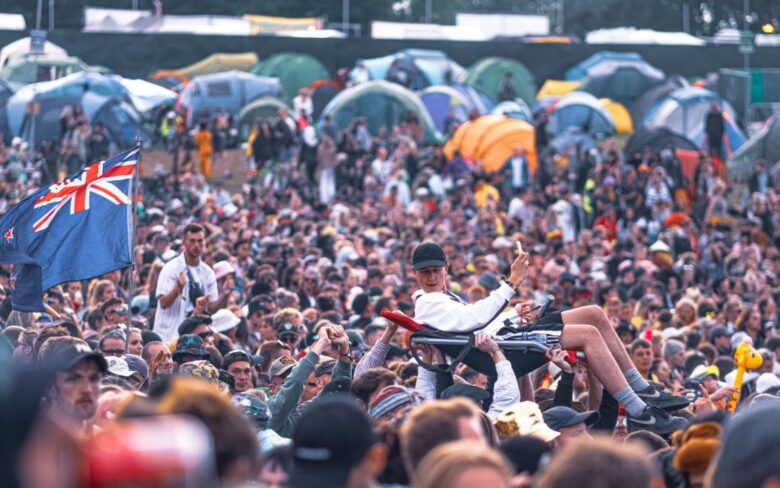
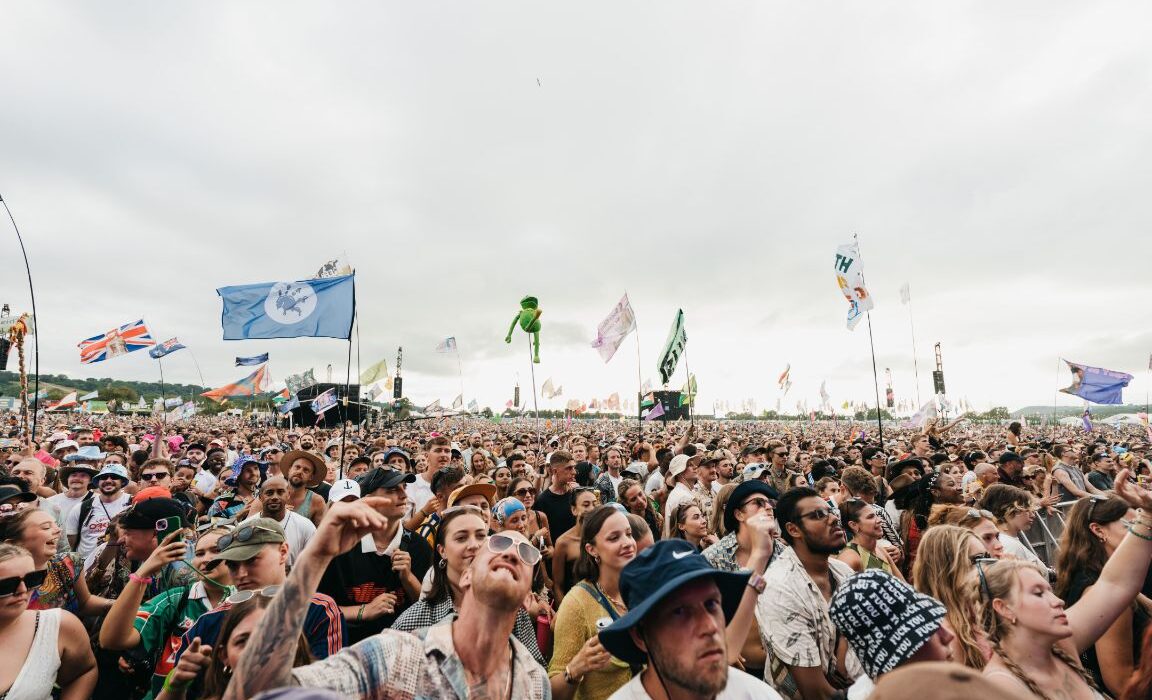
Glastonbury is the most famous music festival in the world. It has been running since 1970 on Michael Eavis’s dairy farm in Somerset, England, and has grown from a 1,500-person weekend event to a five-day city of 200,000 people that generates more media coverage than almost any other annual cultural event in the United Kingdom.
For American visitors, Glastonbury occupies a peculiar position — endlessly talked about, frequently seen in photographs, and yet genuinely difficult to understand from the outside. The experience of actually being at Glastonbury is different from what the photographs and the televised coverage suggest, and first-time American visitors who arrive with Coachella or Bonnaroo as their reference point tend to be simultaneously surprised and overwhelmed.
This guide covers everything an American visitor needs to know before attending Glastonbury for the first time.
What Glastonbury Is
Glastonbury is five days on Worthy Farm in Pilton, Somerset, from Wednesday through Sunday in late June each year. Around 200,000 people purchase tickets, of which approximately 100,000 include camping on the festival site. The remainder commute daily from accommodation in the surrounding area, though this is less common than camping.
The festival covers approximately 900 acres and includes around 80 stages and venues presenting music across virtually every genre, alongside theatre, circus, healing arts, film, comedy, poetry, talks, workshops, a markets area, a children’s area, a dedicated area for quieter and more contemplative experience, and the various informal happenings that emerge organically from 200,000 people sharing a temporary city for five days.
The Pyramid Stage, which hosts the Friday, Saturday, and Sunday headline acts, is the most famous stage in festival history. The Other Stage, Park Stage, West Holts, and John Peel Stage each have their own programming identity and their own community of attendees who follow them specifically. The late-night stages — Arcadia, Block 9, and others — run electronic and dance music from midnight until the early morning hours.
What makes Glastonbury different from other festivals is harder to articulate than what makes it similar. There is a quality of collective experience — of 200,000 people sharing a specific time and place and the weather and the inconveniences and the surprises — that produces something that feels more significant than entertainment. People who attend Glastonbury once tend to return. The return rate and the devotion of the regular attendees is one of the most reliable indicators of what the festival actually delivers.
The Ticket System
Glastonbury tickets are genuinely difficult to obtain and the process for getting them is unlike any other major festival.
Registration
Before you can purchase a Glastonbury ticket, you must register on the Glastonbury website with your name, address, and a photograph of yourself. Registration is free and is not a guarantee of a ticket — it is a prerequisite for entering the ticket sale. Your registration number and photograph are used to link your ticket to your identity and to verify it at the gate.
Registration is open throughout the year. If you are planning to attempt the ticket sale, registering as early as possible is the first step.
The ticket sale
The main ticket sale for the following year’s Glastonbury typically takes place on a Sunday in early October, approximately nine months before the festival. A smaller resale, for tickets that were purchased and subsequently returned, takes place in April of the following year.
Tickets sell out within thirty to sixty minutes of going on sale, and the window of availability has shrunk over the years as demand has increased and the booking system has improved. The practical requirements for a successful ticket purchase are:
Be at your device at the exact moment the sale opens. The time is announced in advance and is typically around 9am UK time. Have your registration number and payment details ready before the sale opens. Use a reliable internet connection. Multiple devices and multiple people attempting simultaneously increases the probability of success.
The Glastonbury website’s booking portal handles a very large number of simultaneous requests at the opening of the sale and the system regularly produces error messages. Persisting through these errors is part of the process — the sale lasts long enough that several attempts are typically possible within the window.
If you do not get tickets
The resale in April of the following year is the second opportunity and is worth attempting if the October sale fails. The resale sells out significantly faster than the main sale but represents genuine ticket availability rather than the secondary market.
The secondary ticket market for Glastonbury is complicated by the festival’s policy of linking tickets to the registered identity of the purchaser. Tickets list the registered holder’s name and photograph, and entrance requires a match between the ticket, the photograph, and a valid photo ID. This makes transferring tickets to other people effectively impossible through official channels, which significantly suppresses the secondary market and makes the resale of Glastonbury tickets at inflated prices both difficult and effectively pointless.
Getting to Glastonbury
Flying into the UK
The nearest major international airports to Glastonbury are Bristol Airport (approximately 30 miles) and London Heathrow or Gatwick (approximately 130 miles). Direct transatlantic flights from major US cities serve both Heathrow and Gatwick. Bristol Airport has fewer international connections but is significantly closer and more convenient for festival travel.
From London airports, the most common route to Glastonbury involves the train from London Paddington to Castle Cary station (approximately 2 hours) with a connecting bus or taxi to the festival site. This route is well-established and additional train services run specifically for festival travel in the days before and after Glastonbury.
From Bristol Airport, coach services run directly to the festival site during the festival period. The journey takes approximately one hour under normal conditions.
Arriving at the festival
Glastonbury gates open on Wednesday afternoon for ticket holders and close on Monday morning. The vast majority of attendees arrive Wednesday or Thursday. Arriving Wednesday allows time to set up camp before the music begins in earnest on Thursday, and the early arrival period has a particular atmosphere as the city assembles around you.
The queues to enter the festival site during peak arrival periods, particularly Thursday morning and afternoon, can be significant. Arriving Wednesday evening or early Thursday morning minimises the gate queue.
The Site
The Worthy Farm site is a working dairy farm for eleven months of the year and a temporary city for one. The landscape is hilly — significantly more so than the photographs suggest — with paths running between stages, camping areas, market stalls, food vendors, and the various facilities that support 200,000 people for five days.
Orientation
The Pyramid Stage is at the centre of the main stage area and visible from significant distances across the site. The Other Stage is immediately adjacent. John Peel Stage and The Park are to the north. West Holts and the dance and electronic areas are to the south and southeast. The Healing Fields, the Green Futures area, and the quieter zones are to the northwest.
The full festival site is large enough that walking from one end to the other takes around 25 to 30 minutes at a normal pace, and many people use the day to gradually migrate between different areas rather than attempting to move quickly between stages.
The Stone Circle
The Stone Circle on the hill at the top of the site is not an ancient monument — it was erected for the festival — but it has become one of Glastonbury’s most significant spaces, used for informal gathering, conversation, and the sunrise watching that has become a festival tradition. The view from the Stone Circle, across the farm and the Somerset countryside, is one of the more beautiful things available at the festival.
Camping
Camping at Glastonbury is the standard way of attending and the experience of waking up on the farm each morning is inseparable from the full festival experience. The camping areas are divided into zones across the site, some close to the main stages and some further away with more space and quieter conditions.
Setting up camp
Arrive as early as possible for the best camping positions. The camping areas fill progressively from Wednesday afternoon and by Thursday morning the most conveniently located spots in the areas closest to the stages are largely taken.
The optimum camping position is close enough to the stages to be convenient but far enough from the late-night stages and the main paths to allow sleep. This is a balance that takes some experience to calibrate and first-timers tend to camp either too close to activity (too noisy) or too far (too much walking).
The camping equipment required for Glastonbury is more substantial than for most summer festivals because English June weather is unpredictable in ways that California desert weather is not. A waterproof tent, a sleeping bag rated for temperatures of around 40 degrees Fahrenheit, a sleeping mat, and adequate waterproof outer clothing for rain are the baseline requirements rather than optional additions.
What to Pack
The essentials
A quality waterproof tent. Glastonbury mud is one of the festival’s most internationally famous features, and the conditions that produce it — wet English grass compacted by 200,000 people over five days — are largely unavoidable in poor weather years. A tent that handles rain properly is a survival requirement. Many experienced Glastonbury attendees use two-person tents for one person to allow additional space for gear that must be kept dry.
Wellington boots. In wet years, Glastonbury mud is genuinely severe. The specific image of people in wellington boots at Glastonbury is not a fashion statement — it is a functional response to conditions that can be ankle-deep. Bring them regardless of the forecast, because English weather in late June is genuinely unpredictable.
Warm layers. June nights in Somerset are cold, particularly after extended periods of outdoor activity. Temperatures regularly drop into the low 40s Fahrenheit after dark, and the combination of exhaustion and cold makes adequate warm layers more important than experience suggests.
Rain gear. A waterproof jacket with a hood, carried in a day bag, eliminates the most common Glastonbury misery. A cheap disposable poncho as a backup costs almost nothing and takes up no space.
A portable phone charger. Phone battery is exhausted faster than expected at Glastonbury, between the photography, the navigation using the festival app, and the communication with other people in your group. A high-capacity portable battery, charged before you leave your tent each day, is a practical necessity.
Cash. While card payment is increasingly accepted across the festival, cash remains the most reliable payment method and some vendors are cash-only. ATMs at the festival exist but have queues.
Ear protection. The sound levels at the main stages and in the late-night areas are high. Foam earplugs or high-fidelity music earplugs allow extended music listening without the hearing fatigue and damage that extended loud music exposure produces.
What not to bring
Glass bottles are not permitted on the Glastonbury site. Alcohol can be brought in within the non-glass limitations set out in the festival rules. Professional photography equipment and large camera rigs are not permitted. Drones are strictly prohibited.
The Culture
Glastonbury has a culture that is easier to participate in than to describe. The collective goodwill of 200,000 people sharing a specific experience produces a social environment that regular attendees describe as one of the most positive they regularly encounter. People help each other with directions, tent collapses, lost items, and the various minor crises of festival life with a consistency that is genuinely remarkable given the scale.
The festival’s left-leaning, environmentally conscious, and socially inclusive values are embedded in its programming and management approach. Glastonbury has a long history of humanitarian work, environmental initiatives, and political engagement that makes it different from purely commercial music festivals.
The informal social life of the festival — the conversations in queues, the spontaneous collaborations between strangers, the communal watching of extraordinary performances, the shared complaints about the weather and the queues — is as much a part of the Glastonbury experience as the music itself.
FAQ
How hard is it to get Glastonbury tickets from the USA?
The process is the same for American applicants as for UK residents. You register on the website, attempt the sale on the same day as everyone else, and succeed or fail based on the same factors. The UK-based fan base gives UK residents a marginal advantage in the sense that they can optimise their setup more easily, but the system does not discriminate by location.
What is the weather like at Glastonbury?
Unpredictable. Late June in southwest England can produce anything from warm sunshine to persistent rain and cold. The worst years, which produce the famous mud photographs, involve sustained rain before and during the festival that turns the grass into a thick silt. The best years are warm and dry. Most years are somewhere between the two. Pack for the worst and hope for the best.
Can I attend Glastonbury without camping?
Technically yes — there are day tickets for some years and the option to stay in surrounding accommodations and commute daily is available. But the camping experience is so central to what Glastonbury is that attending without it misses a significant part of the event. The morning on the farm, the conversations in the camping areas, and the integration of the rest and the music across five days are specifically produced by the camping format.
Is Glastonbury safe for solo travellers?
Yes. The festival has significant safety infrastructure including medical facilities, welfare tents, and a strong community self-policing culture. Solo travellers are extremely common and the social environment of the festival makes meeting people relatively easy. Agreeing on a specific meeting point with anyone you are planning to connect with — phone signal and battery issues make digital communication unreliable — is the standard practical approach.
What should I prioritise seeing at Glastonbury?
Go to the Pyramid Stage for at least one full headliner set, even if the artist is not your first choice, to experience the scale of the crowd and the atmosphere of that specific space. Spend time at a small or medium stage where you encounter something you did not know. Go to the Stone Circle at sunrise on at least one morning. Walk the full perimeter of the festival at least once to understand its scale. Eat the food vendors that look most interesting to you rather than the most familiar. Talk to strangers.