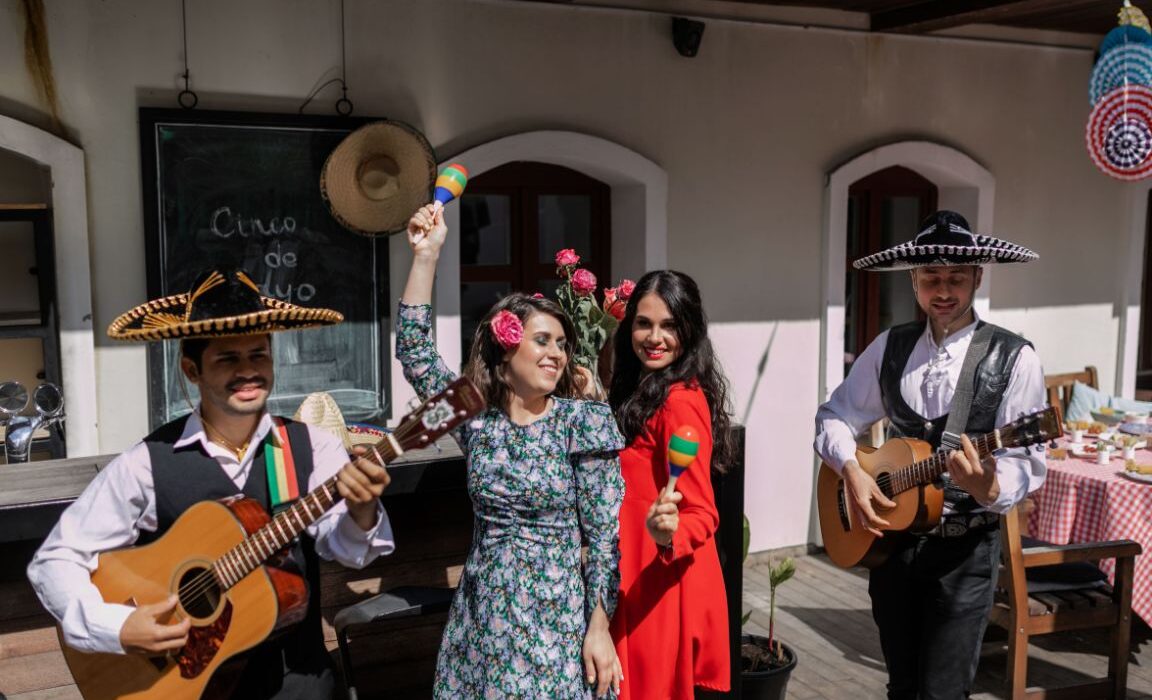
Cinco de Mayo is one of the most widely celebrated spring holidays in the United States and one of the most widely misunderstood. It is commonly assumed to be Mexican Independence Day, which it is not. Mexican Independence Day is September 16th. Cinco de Mayo commemorates the Mexican army’s victory over French forces at the Battle of Puebla on May 5th, 1862 — a battle that held symbolic importance for Mexican national pride during a period of French occupation.
The holiday’s significance in the United States is cultural and political rather than strictly historical. The Chicano movement embraced Cinco de Mayo in the 1960s as an occasion to celebrate Mexican American identity and heritage, and the holiday has grown from there into one of the most attended spring celebrations in the country. In the United States, Cinco de Mayo is celebrated more widely than in Mexico itself, where it is mainly observed in the state of Puebla.
This guide covers the best Cinco de Mayo events and festivals across the USA, along with what to expect and how to engage with the celebration respectfully.
The Largest Celebrations
Fiesta Broadway — Los Angeles, California
When: Late April or early May, the weekend before or on Cinco de Mayo
Fiesta Broadway in downtown Los Angeles is one of the largest Cinco de Mayo celebrations in the world, typically drawing between 500,000 and one million people to a festival that closes multiple blocks of Broadway in the downtown core for a full day of music, food, and cultural programming.
The event features multiple stages with performances spanning regional Mexican music, banda, norteño, mariachi, and Latin pop acts, alongside food vendors representing the full range of Mexican regional cuisine. The scale of the crowd and the concentration of music and food make it one of the most immersive large-scale Latino cultural events available in the United States.
Los Angeles’s large Mexican American community gives the celebration a genuine cultural authenticity that purely commercial Cinco de Mayo events sometimes lack. The event is free to attend, and the surrounding downtown Los Angeles neighborhoods and the nearby Olvera Street — the historic birthplace of Los Angeles — offer additional context for visitors who want to understand the cultural history behind the celebration.
Practical notes: The crowd is enormous. Arrive early for a good position near the main stages. Public transit is strongly recommended over driving. Bring cash for food vendors.
Cinco de Mayo Festival — San Antonio, Texas
When: Around May 5th
San Antonio’s deep Mexican American heritage makes its Cinco de Mayo celebration one of the most culturally rooted in the country. The events in Market Square, the historic Mexican marketplace at the heart of the city, include live music, traditional dance performances, food from local Mexican restaurants and vendors, and programming that connects the celebration to the genuine cultural history of a city where Mexican American culture is not a seasonal decoration but a living presence.
The surrounding Pearl District and the River Walk add additional dining and entertainment options that make a Cinco de Mayo visit to San Antonio easy to extend into a full weekend trip.
Denver Cinco de Mayo Festival — Denver, Colorado
When: May 5th weekend, Civic Center Park
Denver’s Cinco de Mayo celebration in Civic Center Park is consistently cited as one of the largest in the country, drawing hundreds of thousands of visitors over a two-day weekend. The event features multiple music stages, a large food and vendor area, lowrider shows, folklórico dance performances, and children’s programming.
Denver’s Mexican American community has deep roots in the Colorado region, and the Civic Center Park festival reflects that heritage with programming that goes beyond the superficial Cinco de Mayo commercial template. The city’s altitude means May temperatures can be variable, so having layers available for the evening performances is practical regardless of how warm the afternoon is.
Fiesta San Antonio — San Antonio, Texas
San Antonio’s broader Fiesta festival, which begins in April and runs through the weekend after Easter, sometimes overlaps with or leads into Cinco de Mayo programming, making the two events complementary reasons to visit the city in the spring. See our guide to Best Easter Events for more on Fiesta San Antonio.
Regional Events Worth Knowing
Old Pasadena Cinco de Mayo — Pasadena, California
When: May 5th weekend
Pasadena’s Cinco de Mayo street fair in Old Town Pasadena is one of the better mid-size Cinco de Mayo events in Southern California, occupying several blocks of Colorado Boulevard with food vendors, live music, and cultural programming in a setting that is more manageable than the enormous Fiesta Broadway. It works well for visitors who want a genuine Cinco de Mayo experience without the overwhelming scale of downtown Los Angeles.
Cinco de Mayo on Cesar Chavez — Austin, Texas
When: May 5th weekend
Austin’s Cinco de Mayo celebration on Cesar Chavez Street in the East Austin neighborhood has a distinctively local character, reflecting East Austin’s Mexican American cultural heritage and the community’s long relationship with the celebration. The event is smaller and more neighborhood-focused than the major city festivals, which is precisely what makes it worth attending for visitors who want something genuine rather than commercially inflated.
Chicago Cinco de Mayo Parade — Chicago, Illinois
When: May 5th or the nearest weekend
Chicago’s Mexican American community is one of the largest in the Midwest, concentrated in the Pilsen and Little Village neighborhoods on the South and Southwest sides. The Cinco de Mayo parade through Pilsen is one of the most culturally authentic celebrations in the city, reflecting the living Mexican American culture of a neighborhood where the holiday has genuine community meaning. The murals, restaurants, and cultural institutions of Pilsen make it worth visiting at any time of year, but Cinco de Mayo weekend brings the community’s celebratory spirit to full expression.
What Cinco de Mayo Actually Celebrates
Understanding what the holiday commemorates makes attending its celebrations more meaningful.
On May 5th, 1862, a Mexican army of approximately 2,000 soldiers under General Ignacio Zaragoza defeated a French force of 6,000 troops at the Battle of Puebla. France, under Napoleon III, had invaded Mexico partly to collect debts and partly for imperial expansion in the Americas. The victory at Puebla was not decisive — France eventually occupied Mexico City and installed Maximilian I as Emperor — but the symbolism of a smaller, poorly equipped force defeating what was then considered the most powerful army in the world resonated deeply.
The holiday became significant in the United States through the Chicano movement of the 1960s, when Mexican American activists adopted it as a symbol of resistance and cultural pride. The reframing of a Mexican military victory as a celebration of Mexican American identity gave the holiday its particular American character, and that heritage is why the celebration in the United States has grown larger than in Mexico itself.
The Food
Cinco de Mayo celebrations are an opportunity to experience Mexican regional cuisine at its best, and the food vendors at major festivals typically represent a much broader range of Mexican cooking than the generic Tex-Mex that dominates American Mexican restaurant culture.
Regional specialities to look for:
Mole is the sauce that represents the complexity of Mexican cuisine most fully. Mole negro from Oaxaca, mole poblano from Puebla (whose connection to the Battle of Puebla makes it specifically appropriate to Cinco de Mayo), and mole verde each represent different traditions and flavor profiles that bear no resemblance to each other beyond sharing the name.
Tamales in their regional variations — masa dough filled with various combinations of meat, cheese, chile, and other ingredients, wrapped in corn husks or banana leaves and steamed — appear in different forms across Mexico’s regions and are among the most labor-intensive and culturally significant foods in Mexican cuisine.
Birria has become one of the most widely known Mexican dishes in American food culture in recent years and Cinco de Mayo festivals often feature excellent versions of the Jalisco-origin braised meat dish, particularly the birria tacos with consommé that have become a street food phenomenon.
Aguas frescas — fresh fruit waters including jamaica (hibiscus), horchata (rice milk), tamarind, and various seasonal fruits — are the essential non-alcoholic refreshment at any Mexican festival and a genuinely delicious alternative to the beer that tends to dominate Cinco de Mayo commercial celebrations.
The Music
Mariachi
Mariachi music is the most internationally recognized musical tradition of Mexico and one of the most powerful expressions of Mexican cultural identity. A full mariachi ensemble — trumpets, violins, vihuela, guitar, guitarrón, and the singers who are typically also instrumentalists — performing traditional repertoire has an energy and emotional depth that popular representations of mariachi do not convey.
Major Cinco de Mayo celebrations feature mariachi performances of varying quality. The best are professional ensembles performing the classical repertoire of the tradition. Seek these out at the events you attend.
Banda, Norteño, and Regional Mexican Music
Mexican regional music encompasses an enormous range of styles that extend well beyond mariachi, and Cinco de Mayo festivals — particularly in cities with large Mexican American populations like Los Angeles, San Antonio, and Chicago — feature performances that represent this diversity.
Banda music, with its brass-heavy sound rooted in the Sinaloa tradition, is one of the dominant contemporary Mexican popular music styles and typically draws the largest festival crowds. Norteño music, with its accordion and bajo sexto combination rooted in the northern Mexican border region, is among the most beloved regional styles in the American Southwest.
What to Wear
Cinco de Mayo events range from street fairs in warm late-spring weather to evening concerts that cool down as the sun sets. The practical clothing requirements are straightforward.
Comfortable clothes for warm weather. May in most American cities means temperatures in the 60s to 80s Fahrenheit. Light, breathable clothing, sunglasses, and a hat with a brim for daytime events are the baseline requirements.
Layers for the evening. Large Cinco de Mayo festivals run into the evening with music performances that often continue until 9 or 10pm. Temperatures drop after dark in most cities, and having a light jacket or cardigan available for the later portions of the evening is worth the minimal inconvenience of carrying it.
Comfortable shoes. Major Cinco de Mayo festivals involve significant walking on pavement and standing for long periods at music stages. Comfortable, practical shoes that you do not mind getting dirty or worn are the right choice.
Colors. The Mexican flag colors — green, white, and red — are widely worn at Cinco de Mayo celebrations and are a simple way to show participation in the spirit of the occasion. This is entirely optional but is common and appreciated at community-rooted events.
Respectful Attendance
Cinco de Mayo is a celebration of Mexican and Mexican American culture and identity. Attending as a visitor with genuine curiosity and respect for the cultural content of the celebration — the history, the food, the music, the community significance — is different from treating it as a generic excuse for a themed party.
The simplest practical guidance: eat the food, listen to the music, ask questions when you have them, and treat the cultural content of the event as the point rather than as decoration around a drinking occasion. The Mexican American communities that have built and maintained these celebrations for decades are welcoming to visitors who engage genuinely with the culture they are celebrating.
FAQ
What does Cinco de Mayo celebrate?
Cinco de Mayo commemorates the Mexican army’s victory over French forces at the Battle of Puebla on May 5th, 1862. It is not Mexican Independence Day, which is celebrated on September 16th. In the United States, the holiday has an additional layer of significance as a celebration of Mexican American cultural identity, rooted in the Chicano movement of the 1960s.
Is Cinco de Mayo a bigger celebration in the USA than in Mexico?
Yes, significantly. In Mexico, Cinco de Mayo is primarily observed in the state of Puebla, where the battle took place, with modest celebrations elsewhere. In the United States, it has become one of the most widely attended spring celebrations in the country, particularly in cities with large Mexican American populations.
What are the best cities to celebrate Cinco de Mayo in the USA?
Los Angeles, San Antonio, Denver, Chicago, and El Paso are consistently among the best cities for Cinco de Mayo celebrations, reflecting their large and historically rooted Mexican American communities. Austin and Phoenix also have significant events. The quality of the celebration in any city is generally proportional to the size and cultural depth of its Mexican American community.
Is Cinco de Mayo appropriate for families?
Yes. The major Cinco de Mayo festivals are family-oriented events with food, music, dance, and cultural programming suitable for all ages. Evening concerts at some events may run late and be oriented toward an adult audience, but daytime programming at the major festivals is explicitly family-friendly.