Most people’s first music festival is harder than they expected. Not because the music was bad or the lineup was disappointing, but because the physical reality of spending two or three days outdoors in summer heat, in large crowds, with disrupted sleep and irregular eating, turns out to be more demanding than anticipated. The second festival is almost always better because the preparation is better.
This guide is about the preparation. How to manage your body and your energy across a full festival day in summer heat. How to navigate crowds without losing your mind or your group. How to pace yourself across multiple days so the final day is as good as the first.
Managing the Heat
Heat is the defining physical challenge of summer music festivals in the United States. Bonnaroo in Tennessee in June, Lollapalooza in Chicago in August, Austin City Limits in October in Texas — all involve sustained exposure to temperatures that, combined with crowds and physical activity, produce heat-related illness in a consistent proportion of first-time attendees every year.
Hydration is not just about drinking water
Drinking water is necessary but not sufficient. The combination of sweating, heat, and the physical activity of a festival day depletes electrolytes — sodium, potassium, magnesium — as well as water. Replacing water without replacing electrolytes causes hyponatremia, a condition where the blood sodium concentration drops below the safe level. The symptoms — headache, nausea, confusion, and in severe cases, seizure — are often mistaken for dehydration and treated with more water, which makes the condition worse.
The practical solution is simple. Add electrolytes to your water regularly throughout a hot festival day. Electrolyte tablets or powder sachets are compact, inexpensive, and genuinely effective. Coconut water, sports drinks with electrolytes, and salty snacks all contribute. The goal is maintaining the mineral balance that makes your hydration actually work.
How much water? In moderate heat (75 to 85 degrees Fahrenheit) with moderate physical activity, one to one and a half litres per hour is a reasonable guideline. In extreme heat (above 95 degrees) or with significant dancing and movement, more. The test is your urine colour — pale yellow indicates adequate hydration. Dark yellow or amber indicates dehydration. Clear can indicate over-hydration without electrolytes.
Sun protection is ongoing, not one-time
Applying sunscreen once in the morning and assuming it covers the day is one of the most consistent first-timer mistakes. Sunscreen effectiveness reduces over time through sweat, physical contact, and UV exposure. Reapplication every two to three hours is the correct approach, and the reapplication needs to cover all exposed skin including areas that were covered earlier if clothing has shifted or been removed.
A SPF 50 or higher broad-spectrum sunscreen applied to face, neck, arms, and any other exposed skin. A separate SPF lip balm. A wide-brim hat that provides shade for face, neck, and ears. Sunglasses that block UV. The combination of all four dramatically reduces the sun exposure that drives heat-related illness.
Rest during peak heat hours
The hottest part of a summer day is typically between noon and 4pm. The programming at most major festivals includes acts during this window but the best use of the peak heat hours for most people is strategic rest — finding a shaded area, sitting or lying down, eating and drinking, and conserving the energy and body temperature regulation capacity that will sustain you through the evening headliners.
First-timers who try to see everything from gates-open to gates-close on every day of a multi-day festival are almost uniformly miserable by day two. The experienced approach is aggressive rest during the hottest hours and full engagement during the more comfortable morning and evening hours.
Recognise heat illness early
Heat exhaustion produces headache, dizziness, nausea, heavy sweating, cool or pale skin, and muscle cramps. It is treated by moving to a cool shaded area, lying down, and drinking water with electrolytes.
Heat stroke — the more serious condition — produces a body temperature above 103 degrees Fahrenheit, hot dry skin (the sweating mechanism has failed), confusion, and loss of consciousness. It is a medical emergency. Move the person to the coolest available location immediately, apply ice or cold water to the neck, armpits, and groin, and get medical help. Every major festival has medical infrastructure on the grounds for exactly this reason.
If you feel dizzy, confused, or significantly worse than simply hot and tired, seek the festival medical staff. The threshold for asking for help should be low.
Navigating Crowds
Understanding crowd dynamics at main stages
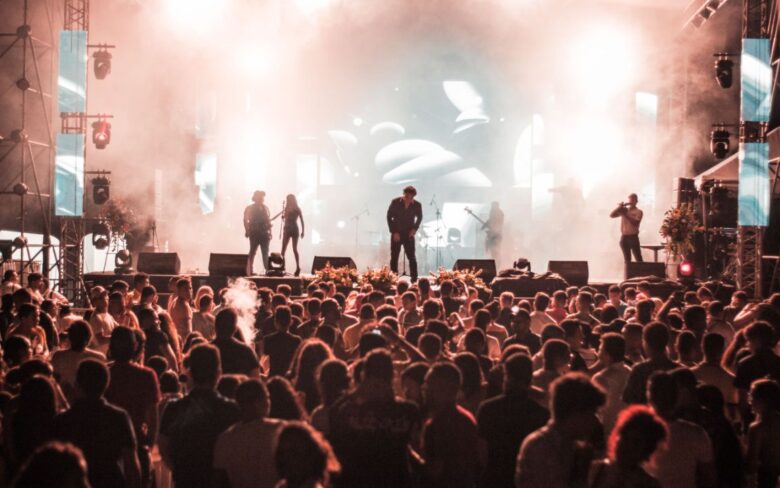
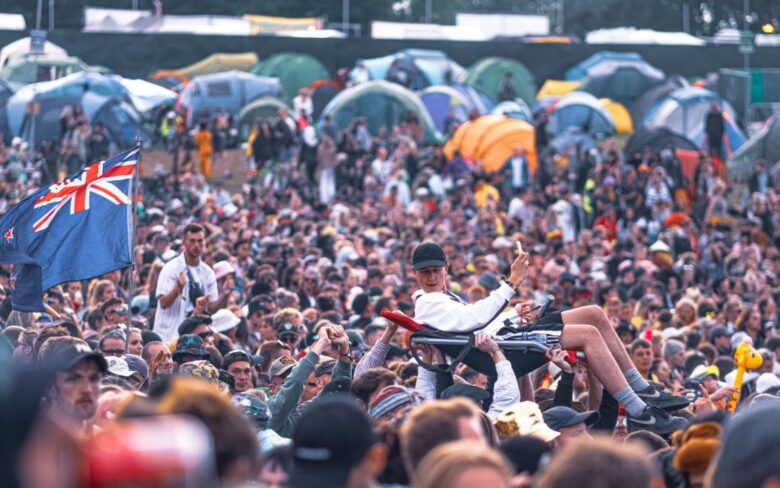
The density of the crowd in front of a main stage at a major festival varies dramatically by distance from the stage. The front sections at large stages can reach a density where movement becomes genuinely limited — a full crowd press where individuals cannot move freely and the collective movement of the crowd produces physical forces on individuals.
Being comfortable in a dense crowd is partly temperament and partly experience, but knowing how crowds work reduces the anxiety of being in them. Crowds move in waves from disturbances at the periphery. The densest area is not the front of the crowd but the area roughly ten to thirty metres back from the barrier, where people are packed closely without the barrier providing resistance. Moving forward through this zone is significantly more difficult than it appears from behind.
For the best combination of crowd comfort and stage view at a major headliner, arriving at the stage area thirty to sixty minutes before the set begins allows you to establish a position at your chosen depth before the crowd fills in around you. The same position that is comfortably accessible thirty minutes before a set is genuinely difficult to reach five minutes before.
Staying with your group
Groups larger than four or five people are difficult to keep together in dense festival crowds. Establish a meeting strategy before you enter a crowd rather than relying on phones, because phone signal and battery in festival crowds are both unreliable.
The practical approach: agree on a meeting time and a specific physical landmark near the stage or in an open area between stages. If the group gets separated, both parties make their way to the landmark at the agreed time. This works when phone communication fails, which it will.
A designated “sweep person” who walks at the back of the group and monitors for stragglers prevents the most common kind of separation — one person stopping to look at something and the rest of the group continuing without noticing.
Moving through crowds
Moving through a dense festival crowd requires patience and specific technique. Trying to push directly through a dense section is both ineffective and alienating to the people around you. The effective approach is to identify the natural movement channels — the paths people use to enter and exit, the lines of slightly lower density that form naturally in every crowd — and to move with rather than against the crowd flow.
Saying “excuse me” and waiting for brief natural openings, rather than pushing, is both more effective and more socially appropriate. Festival crowds are generally cooperative when approached with patience.
Identifying exits before you need them
Before you enter a dense crowd in front of a stage, identify the exits. Look for the steward positions, the crowd management points, and the gaps in the barrier that allow people to leave the crowd section. Knowing where to go if you need to leave quickly — for a medical need, for a distressed companion, or simply because you have had enough — is basic festival crowd safety.
Pacing Across Multiple Days
The single most reliable predictor of how much a person enjoys a multi-day festival is how well they pace themselves. People who treat each day as independent and try to experience everything available every day are consistently worse by day three than people who approach the event as a cumulative experience that requires resource management.
Sleep as a non-negotiable
Sleep deprivation accumulates. Two hours less than your normal sleep requirement on day one becomes two plus two hours on day two, and the cognitive and physical impairment of that accumulated deficit by the third day of a festival is significant and consistent. The ability to enjoy music, to navigate crowds, to make reasonable decisions about eating and drinking, and to manage the physical demands of the environment all degrade with sleep deprivation in ways that most people underestimate.
The best festival sleep is not the most sleep — it is the sleep that is most timed to the festival’s rhythms. If the headliner ends at 11pm and you want to be at the next day’s early afternoon acts, sleeping from midnight to 8am works better than trying to replicate your home sleep schedule and either missing evening acts or lying awake during the early festival hours.
At camping festivals, the noise environment and the light make standard sleep challenging. Earplugs and an eye mask transform the sleeping environment from nearly impossible to manageable. People who use both consistently sleep better at festivals than those who do not.
Eating as fuel, not as an afterthought
A full festival day involves more physical activity than most people’s normal daily routine — more walking, more standing, more movement in heat, more sensory processing. The caloric demand is higher than at the desk or on the sofa, and the combination of the festival environment, alcohol, and the distraction of the event suppresses appetite in ways that leave people significantly under-fuelled without realising it.
Eat something substantial before leaving your accommodation or campsite each day. Eat regularly throughout the day rather than waiting until you are hungry. At camping festivals, the cost and queue time for festival food vendors makes camp cooking for at least one meal per day a practical as well as economic decision.
The foods that sustain festival energy best are the unsexy ones: complex carbohydrates, protein, and fats rather than the sugary foods that provide brief energy and then drop. Festival food options do not always make this easy, but the effort is worth making.
Alcohol management
Alcohol is part of festival culture for most adults who drink, and the festival environment — the heat, the reduced eating, the social context — amplifies its effects relative to normal consumption. Drinking in a festival environment generally produces more noticeable effects than drinking the same amount in more controlled conditions.
The practical management: drink slower than you would normally. Eat before and during drinking. Alternate alcoholic drinks with water. Know what your comfortable limit is for a day that requires you to navigate crowds, manage heat, and function effectively for eight to ten hours.
People who drink heavily on day one of a multi-day festival are consistently worse positioned to enjoy days two and three. The festival is a multi-day experience and managing it as such rather than as a series of independent single days is the approach that produces the best cumulative experience.
The Common Mistakes
Wearing new shoes. Mentioned in every guide and still the most consistent mistake. Broken-in shoes only, always.
Not bringing a warm layer. Summer evening temperatures at outdoor festivals drop consistently and significantly more than daytime forecasts suggest. The person standing in a crowd at 11pm wishing they had brought a jacket is not an unusual sight at any outdoor festival.
Staying at the main stage for every headliner instead of exploring. The smaller stages at major festivals frequently offer the most interesting and memorable musical discoveries of the weekend. Allocating time to stages you are unfamiliar with is how festivals become genuinely exciting rather than just familiar.
Not establishing a meeting plan. Covered above. Agree on a physical meeting point before you need it.
Overcommitting to the schedule. Writing a minute-by-minute itinerary of what to see is an understandable impulse that consistently produces worse festival experiences than a looser approach. Know the two or three things you most want to see each day and leave the rest to discovery.
Ignoring physical warning signs. Dizziness, nausea, and confusion in hot weather are not something to push through. Seeking shade, water, and rest at the first sign of heat-related symptoms is significantly better than managing heat stroke at a festival medical tent.
FAQ
How do I avoid heat exhaustion at a summer festival?
Consistent hydration with electrolytes, sunscreen reapplied every two to three hours, a hat and sunglasses, rest in shade during peak heat hours, and moderate physical activity in the hottest part of the day. The combination of all five prevents the vast majority of heat-related illness at outdoor summer festivals.
What should I do if I get separated from my group at a festival?
Go to the agreed physical meeting point at the agreed time. If no meeting point was established in advance, go to an open area that is clearly visible and send a message when your signal is sufficient. The festival’s information point or lost and found is a neutral meeting location that both parties can find independently.
How do I deal with festival crowds if I am anxious around large groups of people?
Stay on the periphery of crowds rather than pushing to the front. Identify exits from crowd areas before entering. Move toward the stage during quieter moments and step back when the density increases. The less-crowded areas of a festival — the smaller stages, the art areas, the food vendor zones — are genuinely enjoyable and provide a break from the social intensity of the main stages.
Is it normal to feel exhausted by day two of a multi-day festival?
Yes. The combination of disrupted sleep, sustained physical activity, heat, and the sensory intensity of the festival environment produces genuine fatigue that accumulates across days. Prioritising sleep, food, and hydration between festival days reduces the fatigue significantly. People who are severely exhausted by day two of a three-day festival have almost always under-slept and under-eaten relative to the demands of the environment.
What time should I arrive at a stage for a headliner?
Thirty to sixty minutes before the set starts for a comfortable position at mid-crowd depth. Ninety minutes or more before the set if you want to be at the front. The time required increases proportionally with the size of the crowd and the popularity of the act. For the biggest headliners at the largest festivals, two hours before the set provides a front-section position.