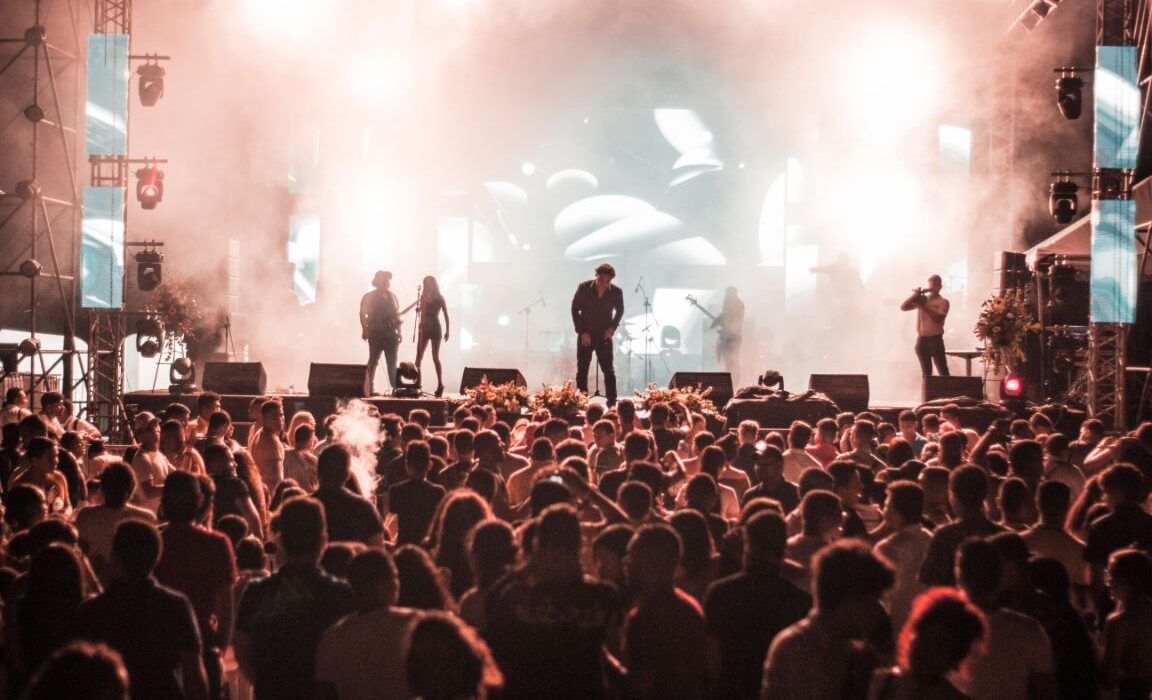
Choosing a music festival based on lineup headliners alone misses the point. The headliners are on stage for three hours across a weekend. The genre culture, the crowd, the production approach, and the overall atmosphere of a festival shaped by a specific musical tradition define the other 90 percent of the experience.
This guide organises the best music festivals in the USA by genre, so you can find the right event for your actual musical taste rather than the one with the most recognisable names in the press release.
Country and Americana
Country music has one of the strongest festival cultures of any genre, rooted in the tradition of outdoor summer gatherings that have been central to country music community since long before the festival format existed.
CMA Fest — Nashville, Tennessee
When: Early June
CMA Fest is the largest country music festival in the world and the most direct expression of Nashville’s identity as country music’s capital. Four days of concerts across multiple stages in downtown Nashville and Nissan Stadium draw around 80,000 fans per day and an enormous concentration of country music acts from established stars to emerging artists.
The Nissan Stadium shows are the big-ticket evening events, with multiple artist sets leading to headliners. The free daytime stages at Riverfront Park and throughout downtown Nashville allow access to a parallel programme of performances that are sometimes more interesting than the stadium shows for fans who want to discover artists earlier in their careers.
The broader Nashville context is part of the CMA Fest experience. The honky tonks on Lower Broadway run live music from morning to late at night throughout the week. The songwriter rounds at the Bluebird Cafe and other venues offer a glimpse into country music’s compositional culture that the stadium shows do not. Nashville at CMA Fest time is immersive in a way that few other festival city combinations achieve.
Best for: Country music fans across the spectrum from mainstream Nashville country to Americana and singer-songwriter. People who want the full Nashville experience as part of a music festival trip.
Stagecoach — Indio, California
When: Late April, the weekend after Coachella
Stagecoach is held at the same Empire Polo Club site as Coachella, the weekend after, and shares much of the production infrastructure while serving a completely different musical community. The country music lineup draws a mix of mainstream Nashville acts and country-adjacent artists across three days and three stages.
The desert setting and the production scale of the Goldenvoice organisation make Stagecoach one of the most polished country festival experiences available. The camping community at Stagecoach has a distinct character — more tailgating and campfire culture than the fashion-forward atmosphere of Coachella’s same site the previous weekend.
Best for: Country fans who want a large-scale, well-produced festival experience in an attractive setting.
Bonnaroo — Manchester, Tennessee
When: Mid-June
Bonnaroo is not a country festival by primary identity — it leans toward the Americana, jam band, and eclectic ends of the spectrum — but the Tennessee setting and the deep roots of the festival in Southern musical culture give it a country and bluegrass dimension that pure mainstream country events do not have. The festival’s history includes iconic sets from country and Americana artists alongside the rock, hip-hop, and electronic acts that have diversified its lineup over the years.
Best for: People who want country and Americana within a broader eclectic festival context. Fans of the jam band and festival culture that overlaps significantly with Americana.
Jazz and Blues
New Orleans Jazz and Heritage Festival — New Orleans, Louisiana
When: Last weekend of April and first weekend of May
Jazz Fest is the most important American jazz festival in cultural terms and one of the most important music festivals in the country by any measure. The lineup spans jazz from traditional New Orleans jazz through contemporary, gospel, R&B, blues, funk, and the full range of musical traditions that intersect with jazz’s roots in the city that produced it.
The experience of hearing traditional New Orleans jazz performed in New Orleans, at a festival that has been celebrating the music and culture of the city since 1970, is qualitatively different from hearing the same music elsewhere. The cultural context is inseparable from the musical experience.
Best for: Jazz enthusiasts of any era or style. Music fans who want genuine cultural depth alongside the music. Anyone who has not experienced New Orleans.
Chicago Jazz Festival — Chicago, Illinois
When: Labor Day weekend, Millennium Park
The Chicago Jazz Festival is one of the oldest free jazz festivals in the country, running since 1979 in Millennium Park with the extraordinary backdrop of the Chicago skyline. The lineup focuses on jazz in its various contemporary and traditional forms and the free admission makes it accessible in a way that ticketed jazz festivals cannot be.
The broader Chicago Blues Festival in June and the Chicago Gospel Music Festival in May sit alongside the Jazz Festival as part of the city’s multi-festival summer music programming, and combining any of them with a Chicago visit is straightforward given the consistent park setting.
Monterey Jazz Festival — Monterey, California
When: Third weekend of September
The Monterey Jazz Festival has been running since 1958, making it the longest-running jazz festival in the world. The setting at the Monterey County Fairgrounds, the historical significance of the festival, and the consistently strong programming across eight stages make it the benchmark for American jazz festival experience.
The 1958 and 1963 Monterey Jazz Festival recordings, and the 1967 Monterey Pop Festival that used the same site, give the location a historical resonance that adds to the musical experience in ways that newer festivals cannot replicate.
Best for: Serious jazz fans. People who value historical significance in a festival context. Anyone visiting the Monterey Peninsula.
Electronic and Dance Music
Electric Daisy Carnival (EDC Las Vegas) — Las Vegas, Nevada
When: Mid-May
EDC Las Vegas at the Las Vegas Motor Speedway is the largest electronic dance music festival in the United States, drawing around 400,000 attendees over three nights. The production scale is extraordinary — the main stages are among the largest and most elaborately designed in the world, and the overall production budget is visible in every element of the experience.
EDC’s three-night format, beginning at sunset and running through the early morning hours, is specifically calibrated to the Las Vegas climate and culture. The desert heat dissipates after dark and the festival experience is purely nocturnal, which gives it a character distinct from daytime-heavy festivals.
Best for: EDM fans who want the most large-scale, production-intensive festival experience available in the United States.
Ultra Music Festival — Miami, Florida
When: Late March
Ultra Music Festival in Bayfront Park in downtown Miami is one of the most internationally significant electronic music festivals in the world, drawing artists and attendees from across the globe to a setting that combines the energy of Miami’s nightlife culture with the production scale of a major outdoor festival.
The lineup leans toward the larger-room electronic styles — progressive house, techno, trance — and the mainstage programming is among the most heavily produced available at any outdoor festival. The Miami setting in late March, when the weather is optimal, makes the outdoor experience significantly more comfortable than summer EDM festivals in hotter climates.
Lightning in a Bottle — Bradley, California
When: Late May
Lightning in a Bottle at Lake San Antonio in California is the most community-oriented of the major American electronic festivals, combining music with wellness programming, art installations, workshops, and the kind of intentional community culture that distinguishes it from pure entertainment-focused events. The festival has a strong yoga, meditation, and healing arts dimension alongside electronic music that sits somewhere between the mainstream EDM festival circuit and the more experimental end of the spectrum.
Best for: People who want electronic music within a broader holistic festival context. Fans of the deeper, more experimental end of electronic music.
Indie and Alternative
Pitchfork Music Festival — Chicago, Illinois
When: Mid-July, Union Park
The Pitchfork Music Festival is three days of carefully curated indie and alternative music in Union Park, selected by the editorial perspective of Pitchfork Media. The curation is the point — the lineup consistently includes a mix of critically acclaimed artists across several generations of indie music alongside emerging artists who will be better known in three years.
The scale is deliberately manageable. Three stages, moderate crowds, and the Union Park setting in the Wicker Park neighborhood make Pitchfork one of the most enjoyable large music festival experiences precisely because it does not try to be everything.
Best for: Indie music enthusiasts. People who prioritise musical discovery over headliner recognition. Anyone who wants a festival where the crowd is there specifically for the music.
Newport Folk Festival — Newport, Rhode Island
When: Late July
The Newport Folk Festival has been running since 1959 and occupies a position in American music history that no other folk festival can claim. The 1965 Bob Dylan electric set at Newport Folk remains one of the most discussed moments in popular music history. The festival itself, held at Fort Adams State Park with Narragansett Bay as backdrop, has maintained a curatorial standard that makes it one of the most consistent music festival experiences in the country.
Tickets are distributed by lottery and the festival sells out. The size is deliberately small — around 10,000 attendees — which creates an intimacy that is impossible at larger events. Artists frequently appear on multiple stages and in informal collaborations that do not happen at commercial festivals.
Best for: Folk, Americana, and roots music fans. People who value intimacy and curation over scale. Music fans who want a genuine connection between setting, history, and programming.
Sasquatch! Music Festival / Northwest festival circuit
The Pacific Northwest has a strong independent music festival culture, with events including the Bumbershoot festival in Seattle and various smaller regional events that draw on the area’s rich history of independent and alternative music.
Hip-Hop
Rolling Loud — Miami, Los Angeles, San Francisco
When: Varies by location
Rolling Loud has become the most significant hip-hop festival brand in the United States in a relatively short time, operating events in Miami, Los Angeles, and San Francisco with lineups that represent the full spectrum of contemporary hip-hop from mainstream trap to underground and experimental.
The Miami event, typically held in July at Hard Rock Stadium, is the flagship and the most attended. The production scale and lineup quality have made Rolling Loud a genuine institution in a genre that had previously been underserved by the American festival circuit.
Best for: Hip-hop fans across the contemporary spectrum. People who want a large-scale festival experience within a genre-specific community.
Classical and Opera
Ravinia Festival — Highland Park, Illinois
When: June through September
Ravinia Festival is the oldest outdoor music festival in the United States, running since 1905 on the grounds of a former amusement park in Highland Park, north of Chicago. The summer home of the Chicago Symphony Orchestra, Ravinia programs classical concerts, jazz, pop, and world music across a season that runs from late June through early September.
The experience of attending a Chicago Symphony performance on the pavilion lawn at Ravinia, with a picnic, wine, and the gentle summer evening, is one of the most civilised outdoor music experiences available anywhere. The lawn seating outside the covered pavilion offers a genuinely pleasant alternative to formal concert hall attendance, and the combination of serious musical programming with the picnic culture that Ravinia has developed over more than a century is unlike any other American music festival.
Best for: Classical music lovers. People who want outdoor music without the festival crowd experience. Families with older children who appreciate accessible classical programming.
How to Choose the Right Music Festival
Start with genre, not headliners. Headliners change each year. The genre culture, crowd, and atmosphere of a festival are consistent. Choose based on what music you actually love, not what artist is booked this particular year.
Consider the festival’s age and reputation. Festivals that have been running for decades — Newport Folk, Ravinia, Monterey Jazz, Bonnaroo — have refined their programming and logistics in ways that newer events have not. First-time festivals and relatively new events carry more operational risk alongside the freshness of a new concept.
Think about the non-music experience. Where is the festival? What is the camping or accommodation situation? What is the food like? What is the crowd culture? A festival where everything outside the music suits you produces a better overall experience than one where the music is perfect but everything else is miserable.
Book early. The best festivals sell out. Newport Folk tickets through the lottery are gone quickly. Bonnaroo sells in waves. EDC Las Vegas sells multi-day passes months in advance. Identifying the festivals you want to attend for the following year and tracking their ticket sales is the practical requirement for reliable access.
FAQ
What is the best music festival in the USA?
There is no single answer — it depends entirely on genre preference and what kind of festival experience you want. Bonnaroo for camping culture and eclectic programming. Newport Folk for historical significance and intimacy. EDC Las Vegas for production scale and pure EDM. CMA Fest for country music depth and Nashville context. Jazz Fest for cultural richness and food.
Are music festivals worth the cost?
For the right event and the right person, yes. A well-chosen festival that matches your musical taste and your tolerance for the conditions of attending provides an experience that individual concerts cannot replicate. The combination of music discovery, community, and the particular social experience of a multi-day outdoor event is genuinely distinct.
How far in advance should I book music festival tickets?
For major festivals, treat them like plane tickets — book the moment they go on sale. Newport Folk tickets through the lottery require registering in advance. Bonnaroo, Lollapalooza, and Coachella sell out quickly in their initial sale windows. Six months to a year ahead is the right planning horizon for the most in-demand events.
What is the most family-friendly music festival?
Ravinia Festival is the most naturally family-friendly, with its lawn seating, picnic culture, and the flexibility of the outdoor setting. Many major festivals have designated family camping areas and family-friendly programming. Newport Folk is intimate enough to be manageable with children. The large EDM festivals are not appropriate for children. Research the specific age policies and family facilities before attending any festival with children.