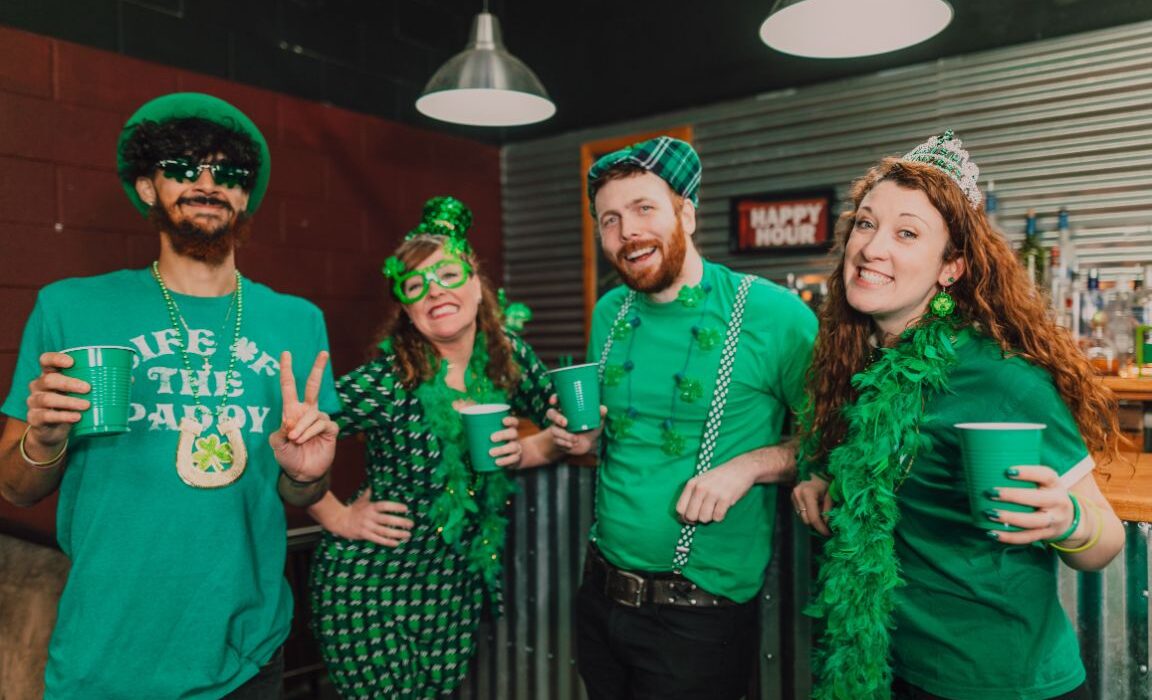
St. Patrick’s Day in America is a celebration that has grown far beyond its origins as a religious feast day honoring the patron saint of Ireland. The Irish diaspora that settled in American cities through the 18th and 19th centuries built a St. Patrick’s Day tradition that combined genuine cultural pride with the particular exuberance of immigrant communities celebrating their heritage in a new country. The parades, the green rivers, the music, and the collective wearing of green have become one of the most widely practiced American holiday traditions, drawing participation from people with no Irish heritage whatsoever.
This guide covers the best St. Patrick’s Day events and festivals across the USA, from the iconic to the genuinely overlooked.
The Iconic Events
Chicago River Dyeing — Chicago, Illinois
When: The Saturday before St. Patrick’s Day
The Chicago River dyeing is one of the most visually dramatic public events in the United States and the most distinctively Chicago contribution to the American St. Patrick’s Day tradition. Since 1962, members of the Chicago Journeymen Plumbers Local 130 have dyed the Chicago River bright green using an orange powder that reacts with the water to produce the color. The dyeing itself takes about 45 minutes, and the river runs green for several hours before the dye dissipates.
The dyeing takes place from a boat at the Michigan Avenue bridge and is visible from the bridges along the Chicago River walk. The best viewing positions fill up in the hours before the event, which typically happens between 9am and 11am on the Saturday before St. Patrick’s Day. The crowd along the river walk is large and growing each year as the event has become more widely known.
The Chicago St. Patrick’s Day Parade runs through the South Loop on the same Saturday afternoon, creating a full day of St. Patrick’s Day activity in the city. The parade draws around 300,000 spectators and is one of the largest in the country outside of New York.
Practical notes: The river dyeing time is announced on the day rather than in advance, which keeps the precise moment somewhat unpredictable. Dress in warm layers — March in Chicago is cold, and standing along the river for an extended period in winter temperatures requires proper preparation.
St. Patrick’s Day Parade — New York City, New York
When: March 17th (or the nearest Saturday when March 17th falls on a Sunday, per some years)
The New York City St. Patrick’s Day Parade is the oldest and largest St. Patrick’s Day parade in the world, having been held almost every year since 1762 — before the United States existed as a nation. The parade runs up Fifth Avenue from 44th Street to 79th Street and draws an estimated two million spectators along its route.
The parade is organized and marched by Irish American organizations, county societies, fire and police department units, and various civic groups rather than by commercial floats. It has a more traditional and less commercially produced character than many major American parades, which gives it a genuine communal feeling that parades with elaborate corporate floats often lack.
The parade passes St. Patrick’s Cathedral, where the Archbishop of New York reviews the march from the cathedral steps, which remains one of the enduring images of the New York St. Patrick’s Day tradition.
The surrounding streets of Midtown Manhattan are packed with people in green throughout the day, and the Irish pubs and bars along and around the parade route operate at maximum capacity from the morning hours.
Practical notes: The parade begins at 11am. Good viewing positions along Fifth Avenue in the 50s and 60s fill from the early morning. The area around St. Patrick’s Cathedral at 50th Street is the most crowded section. Bars in the surrounding area require patience and often have significant queues.
Savannah St. Patrick’s Day Celebration — Savannah, Georgia
When: March 17th, with events across the surrounding week
Savannah’s St. Patrick’s Day celebration is the largest per-capita St. Patrick’s Day event in the United States and one of the most unexpectedly spectacular. The city’s Irish American heritage runs deep — Savannah has had a St. Patrick’s Day parade since 1824 — and the combination of the city’s extraordinary beauty, its warm March weather, and its commitment to full-scale celebration has made it one of the most attended St. Patrick’s Day destinations in the country.
The parade, which runs through the historic district past the famous squares, draws around 400,000 spectators to a city of approximately 150,000 residents. The squares themselves, with their cathedral live oaks draped in Spanish moss, are filled with people throughout the day. The city dyes its fountains green. Restaurants and bars run themed menus and events for the entire week surrounding March 17th.
What distinguishes Savannah’s celebration is the combination of the city’s architectural beauty, the warmth of Georgia in March, and the genuine communal investment in the occasion. It feels like a city that genuinely loves this holiday rather than a city that is tolerating it.
Practical notes: Accommodation in Savannah for St. Patrick’s Day week books out months in advance. Book as early as possible. The city is easily walkable and the historic district is the center of all activity.
Regional Events Worth Attending
South Boston St. Patrick’s Day Parade — Boston, Massachusetts
When: The Sunday closest to March 17th
Boston’s St. Patrick’s Day parade runs through South Boston, the historic center of Boston’s Irish American community, and has a character that is more locally rooted and less touristically oriented than the New York parade. South Boston’s Irish American heritage is genuine and multi-generational, and the parade reflects a community celebrating its own identity rather than performing for outside visitors.
The parade draws several hundred thousand spectators along its Broadway and East Broadway route through Southie, with the bars and restaurants of the neighborhood operating at capacity from the morning hours.
Boston as a city takes St. Patrick’s Day seriously in a way that reflects the size and influence of its Irish American population, and beyond the South Boston parade, the city’s various neighborhoods and institutions organize events throughout the week.
Kansas City St. Patrick’s Day Parade — Kansas City, Missouri
When: March 17th weekend
Kansas City’s St. Patrick’s Day parade is consistently cited as one of the largest in the Midwest and one of the best organized in the country. The parade runs through the Power and Light District in downtown Kansas City and draws around 200,000 spectators, with the surrounding entertainment district providing the food, drink, and music venues that make a full day of St. Patrick’s Day activity possible.
Cleveland St. Patrick’s Day Parade — Cleveland, Ohio
When: The Sunday before March 17th
Cleveland’s significant Irish American heritage supports one of the oldest and most community-rooted St. Patrick’s Day parades in the Midwest, running since 1842. The parade through downtown Cleveland reflects the genuine Irish American culture of a city where that heritage has deep roots, and the surrounding events in the bars and restaurants of the Flats and the Gateway district make it a full day of activity.
San Francisco St. Patrick’s Day Parade — San Francisco, California
When: The Saturday closest to March 17th
San Francisco’s St. Patrick’s Day parade runs through the Civic Center and Market Street area and draws a significant crowd to a parade that reflects the city’s Irish American heritage and its particular civic culture. The surrounding Mission District, with its bar and restaurant scene, and the Irish Cultural Center of San Francisco provide context for a celebration that has genuine community roots.
The Pubs and the Music
St. Patrick’s Day in America is inseparable from its pub culture, and the best St. Patrick’s Day pub experiences are in the cities and neighborhoods where Irish American culture has genuine depth.
What to look for in a St. Patrick’s Day pub
The difference between a genuinely good St. Patrick’s Day pub experience and a generic green-beer commercial event comes down to a few specific qualities.
Live traditional Irish music — the fiddle, uilleann pipes, tin whistle, bodhrán, and concertina combination that constitutes traditional Irish session music — is the musical tradition that most authentically connects American St. Patrick’s Day celebrations to their Irish cultural origins. A pub that has a genuine trad session running is worth seeking out over any establishment offering a DJ or a cover band playing “Shipping Up to Boston” on a loop.
Quality Irish stout and whiskey. Guinness served correctly — a two-part pour, rested before completion, with a proper head — is a different drink from Guinness poured quickly into a plastic cup at an outdoor event. An Irish pub that takes the pour seriously is likely to take other aspects of the occasion seriously as well. Irish whiskeys from distilleries beyond the two or three multinational brands are increasingly available in American Irish pubs and worth exploring.
The company of people who actually enjoy the occasion. The best St. Patrick’s Day experiences are typically in establishments where people are genuinely having a good time in each other’s company rather than in the most crowded venues where the scale makes enjoyment difficult.
The Food
St. Patrick’s Day food in America has a canon of its own that is worth engaging with genuinely rather than superficially.
Corned beef and cabbage is the quintessential Irish American St. Patrick’s Day dish, even though it is not traditionally Irish in origin — the Irish American immigrant experience of substituting the affordable corned beef available in American cities for the bacon and cabbage of the Irish tradition produced a dish that became a symbol of Irish American identity. A properly made corned beef and cabbage, with the beef slowly braised to tenderness and the vegetables cooked correctly, is genuinely good food.
Irish soda bread in its authentic form — a simple, dense bread made with baking soda rather than yeast, typically including buttermilk and sometimes raisins — is one of the great quick breads in any tradition and far better than the commercial versions that appear in supermarkets in March.
Lamb stew in the Irish tradition — long-braised lamb with root vegetables in a simple but deeply flavored broth — is the other traditional Irish dish worth seeking out at restaurants running St. Patrick’s Day menus.
What to Wear
St. Patrick’s Day events in March span a wide temperature range across the country, from cold in Chicago and Boston to mild in Savannah and San Francisco.
Green is expected and appreciated. Wearing green at St. Patrick’s Day events is one of the most widely practiced American holiday customs, and showing up in green at any St. Patrick’s Day parade or event is simply participating in the tradition. The shade of green matters less than the presence of it.
Layers for cold-weather cities. March in Chicago, Boston, and New York is genuinely cold, and parade watching involves standing still for extended periods. Full winter layering — thermal base, mid-layer, proper coat, hat, gloves — is necessary for comfortable attendance at cold-weather St. Patrick’s Day parades.
Comfortable shoes. St. Patrick’s Day events involve significant walking and standing. Practical, comfortable footwear is the right choice over anything that prioritizes appearance at the cost of function.
Waterproof options. March weather in the Northeast and Midwest frequently involves rain. A waterproof outer layer or a compact rain jacket adds meaningful comfort at outdoor parade events where sheltering from rain is not practical.
FAQ
Why do Americans celebrate St. Patrick’s Day so enthusiastically?
The large Irish diaspora that settled in American cities, particularly in the Northeast and Midwest, from the 18th century onward established St. Patrick’s Day as a significant cultural celebration in their communities. The holiday provided an occasion for immigrants to celebrate their heritage publicly and build community solidarity. Over generations, participation in the celebration broadened beyond the Irish American community as the holiday became embedded in the broader American cultural calendar.
What is the oldest St. Patrick’s Day parade in the USA?
The Boston parade, which has been held since 1737 according to some records, and the New York parade, which dates to 1762, are the two most commonly cited oldest parades. The New York parade is more reliably documented and is widely considered the oldest continuous St. Patrick’s Day parade in the country.
Is green beer a traditional Irish drink?
No. Green beer is an American invention with no connection to Irish tradition. Food coloring added to light beer to produce a green color has become associated with American St. Patrick’s Day celebrations but bears no relationship to Irish drinking culture. Genuine Irish stout, Irish whiskey, and Irish craft beer are more authentic and more enjoyable choices at any St. Patrick’s Day event.
What is the best city for St. Patrick’s Day in the USA?
Chicago for the most visually spectacular single event — the river dyeing is genuinely unlike anything else. New York for the largest and most historically significant parade. Savannah for the most beautiful setting and the most comprehensively festive citywide atmosphere. Boston for the most community-rooted celebration. The honest answer depends entirely on what kind of St. Patrick’s Day experience you are looking for.