Packing for a music festival is harder than it looks. Wear too little and you’re freezing at midnight. Wear too much and you’re carrying a bag the size of a small country through a 90,000-person crowd. Get the shoes wrong and your festival is over by day two.
This guide cuts through the noise. Whether you’re heading to Coachella in the California desert, Bonnaroo in Tennessee, Lollapalooza in Chicago, or any other US festival, here’s exactly what to wear — and what to leave at home.
The Golden Rules of Festival Dressing
Before diving into specifics, four rules that apply to every festival, every climate, every vibe:
Comfort beats style, every time. You will be on your feet for 8–12 hours. You will be hot, then cold, then sweaty, then cold again. The outfit that looks incredible in your mirror at home will feel very different after hour six in a crowd. Prioritize comfort first, then build style around it.
Wear things you don’t mind ruining. Festivals are dirty. Mud, beer spills, sunscreen, grass stains — your clothes will take a beating. Don’t bring anything you’d be upset about losing or destroying. This is not the occasion for your favorite white sneakers or your nicest denim jacket.
Layers are non-negotiable. Even in summer, temperatures at most US festivals drop significantly after dark. A California desert night can be 30°F colder than the afternoon. A Chicago August evening turns chilly by 10pm. Always have a layer you can tie around your waist during the day and pull on at night.
Pockets matter more than aesthetics. Phone, cash, ID, keys — you need somewhere to put them that isn’t a bag you have to watch constantly. Cargo pants, shorts with deep pockets, or a small hip pack solve this immediately.
Shoes — The Most Important Decision You’ll Make
If you get one thing right, make it your footwear. More festivals are ruined by wrong shoe choices than anything else.
Best options
Broken-in sneakers are the gold standard for most festivals. The key word is broken-in — new sneakers will destroy your feet before lunch on day one. Wear whatever you’re choosing at least 3–4 times before the festival. Classic low-tops (Converse, Vans, Nike) work well; they’re comfortable, low-profile, and don’t matter if they get wrecked.
Ankle boots are a great choice if there’s any chance of mud or rain. They protect your ankles, add warmth in the evening, and hold up to rough ground better than sneakers. A chunky-soled Chelsea boot is the festival sweet spot — practical but still stylish.
Trail runners or hiking shoes are the smartest practical choice for multi-day camping festivals like Bonnaroo or Electric Forest. They’re built for long days on uneven terrain, usually waterproof or water-resistant, and far more comfortable than fashion sneakers over 10+ hours of walking.
What to avoid
Flip flops are a firm no for any crowd situation. Someone will step on your feet. You’ll be stepping in things you’d rather not think about. Keep them for the campsite only.
Brand new shoes of any kind. Non-negotiable. Never.
High heels — unless you enjoy standing still in one spot all day, which defeats the purpose of being at a festival. Platform boots with a solid, stable base are the compromise if you want height.
White shoes. They will be brown by noon on day one.
Daytime Outfits
Festival days are usually warm to hot, high-energy, and long. Your daytime look should handle sun exposure, movement, and a full day without needing adjustment.
The reliable formula
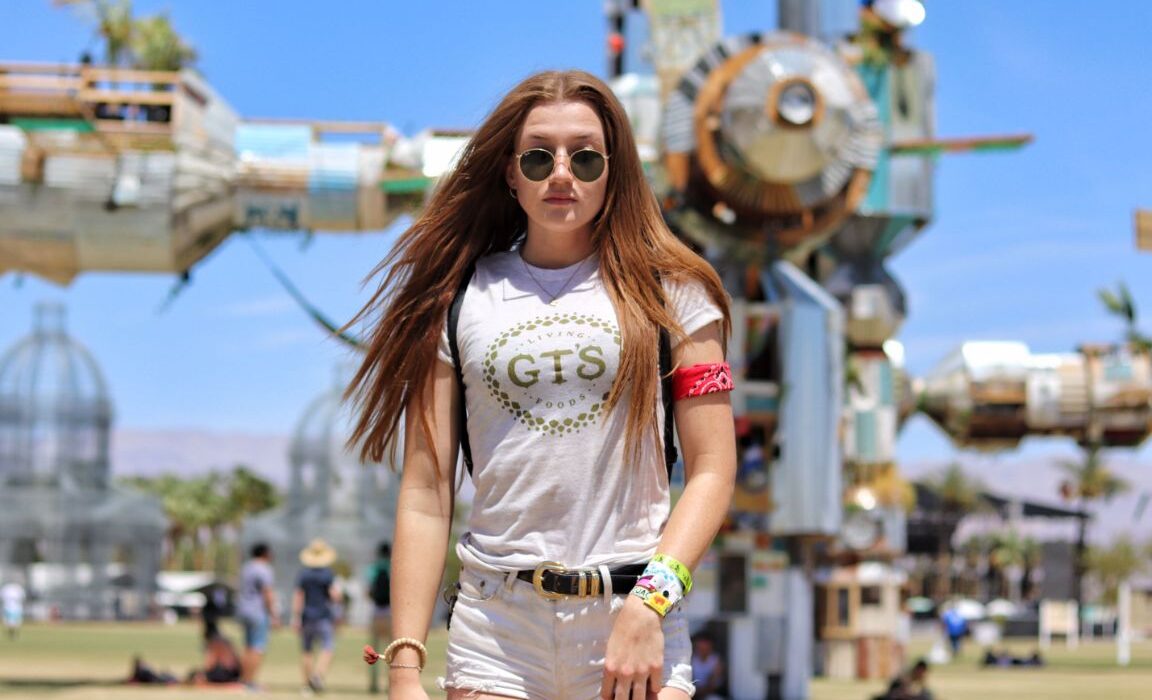
A simple, proven daytime festival outfit: shorts or lightweight trousers + a breathable top + one layer to tie around your waist. That’s it. Everything else is stylistic choices built on that foundation.
Shorts: Denim cutoffs are a festival classic for good reason — durable, comfortable, plenty of pocket space, and look good all day. Linen or cotton shorts work well in extreme heat. Avoid anything tight or restrictive.
Tops: A loose cotton t-shirt, a linen shirt worn open over a tank, a cropped top if the weather warrants it. Natural fabrics breathe better than synthetics in heat. Moisture-wicking athletic fabrics are genuinely practical for the sweatiest parts of the day.
The waist layer: A lightweight denim jacket, a flannel shirt, or a thin hoodie. Something you can easily tie around your waist during the afternoon and pull on as soon as the sun drops.
Coachella / California desert festivals
The Coachella aesthetic has become its own genre — flowy dresses, crochet tops, wide-brim hats, fringe, lots of skin. It works because the climate supports it (dry heat, minimal humidity). If you’re going for the look: a flowy midi dress with boots is the most photographed festival outfit in America for a reason. Sundresses with a denim jacket for the evening are equally solid.
The wide-brim hat isn’t just aesthetic — direct California desert sun will drain you faster than anything else. A hat is practical gear, not just an accessory.
Midwestern summer festivals (Lollapalooza, Pitchfork)
Chicago in August is humid in a way that California is not. Prioritize breathable fabrics above everything. A linen shirt, loose trousers, and good sneakers. Save the heavier denim for the evening when it cools down near the lake.
Nighttime Outfits
Nights at festivals are a completely different experience from the daytime — cooler temperatures, different crowd energy, different lighting (which matters more than people admit for photos and general vibe). A lot of people bring a separate “night outfit” or at minimum plan the transition from daytime.
The simplest night upgrade: pull on your waist layer, swap shorts for jeans or trousers if you have them, and add one more layer on top if needed. That shift alone takes you from “daytime festival” to “night show” without needing a costume change.
For electronic or late-night sets specifically, people go more expressive — sequins, metallics, body glitter, bold colors. The darkness and production lighting at night stages reward standing out. This is where festival fashion gets more theatrical, and it’s entirely optional but genuinely fun.
Always have: A hoodie or light jacket that you know can be grabbed quickly when the temperature drops. Losing track of layers at night is how people end up cold and miserable at 1am.
What to Wear If You’re Camping
Camping festivals (Bonnaroo, Electric Forest, Burning Man) have an extra layer of planning because your festival clothes also need to survive the campsite.
Day 1 rule: Don’t wear your best outfit on the first day when you’re still setting up camp. Save the good stuff for when you’re oriented and ready to actually enjoy yourself.
Mornings at camp: Comfortable, practical — shorts or joggers, a t-shirt, sandals for moving around the campsite. You’re not performing for anyone at 9am while you’re finding the coffee vendor.
Keep one set of clothes clean. Designate one outfit that stays in a sealed bag until you need to travel home or to a hotel. Four days of festival will leave most of your clothes in a state you won’t want to wear on public transport.
Sleep clothes matter. A lightweight sleeping layer — thin joggers and a long-sleeve top — means you’re not wearing your festival clothes to bed and ruining them with sunscreen and campsite grime.
Dressing for the Weather
| Condition | Key pieces | Watch out for |
|---|---|---|
| Hot & dry (Coachella, BottleRock) | Loose cotton/linen, wide-brim hat, sunscreen, sunglasses | Dehydration, sunburn — cover your shoulders by afternoon |
| Hot & humid (Bonnaroo, Jazz Fest) | Moisture-wicking fabrics, loose fit, breathable shoes | Chafing — body glide is your friend, especially in shorts |
| Unpredictable / rain likely (Glastonbury, some Midwest festivals) | Waterproof boots or wellies, poncho (not umbrella), waterproof bag liner | Mud — assume everything below the knee gets covered |
| Cool evenings (ACL in October, Newport Folk) | Layers you can add at sunset, light jacket, warm socks | Underestimating how fast it cools — always bring more than you think you need |
| Desert nights (Burning Man, Coachella camping) | A proper warm layer — not just a hoodie | Desert nights can drop to 50°F or below — people consistently underprepare |
What Bag to Bring
Your bag choice matters almost as much as your outfit. You’ll be wearing it for the entire day.
Small backpack (15–20L) is the most practical choice for a full festival day. Enough room for a water bottle, sunscreen, a layer, snacks, and a phone charger. Look for one with a dedicated water bottle pocket on the side so you can access it without taking the bag off.
Belt bag / hip pack works well if you’re traveling light — phone, wallet, keys, lip balm. Many people combine a hip pack worn across the chest with a small bag for their layer and water. This is increasingly the standard festival carry.
Clear bags are required at some festivals (many US venues have adopted NFL-style clear bag policies for security). Check your festival’s specific bag policy before you leave home — some have strict size restrictions too.
Whatever bag you choose: make sure it can be worn comfortably in a dense crowd, closes securely (zips over velcro), and you genuinely don’t mind if it gets dirty or damaged.
What Not to Wear — The Definitive List
Uncomfortable shoes. Covered above but worth repeating — this is the number one festival mistake.
Anything you’d be devastated to lose. Jewelry gets lost in crowds. Expensive sunglasses get sat on. Your lucky vintage t-shirt gets beer spilled on it. Leave the irreplaceable stuff at home.
Feather headdresses and bindis. If you’re not from a culture where these have meaning, wearing them at a festival is widely considered disrespectful. There are a thousand ways to dress creatively that don’t involve borrowing sacred symbols from cultures other than your own.
Anything too restrictive. Tight jeans, a blazer you can’t move in, a dress that requires constant adjustment. Festivals involve a lot of unexpected movement — pushing through crowds, sitting on the ground, dancing for three hours straight. Wear things that move with you.
A brand new outfit bought specifically for the festival. Wash new clothes before you wear them. Better yet, wear new pieces a few times before the festival so you know how they actually feel after hours of wear.
An umbrella. You’re the person blocking everyone’s view and poking people in the eye. Pack a poncho instead — a cheap disposable one takes up almost no space and actually keeps you dry in a crowd.
The Short Version
If you stopped reading at the top: broken-in shoes, breathable layers, one warm piece for the night, a bag that closes securely, nothing irreplaceable. Every other choice is stylistic and up to you — but get those fundamentals right and you’ll be comfortable enough to actually enjoy yourself.
Next: our complete festival packing list covers everything else you need to bring — gear, essentials, and the things people always forget.