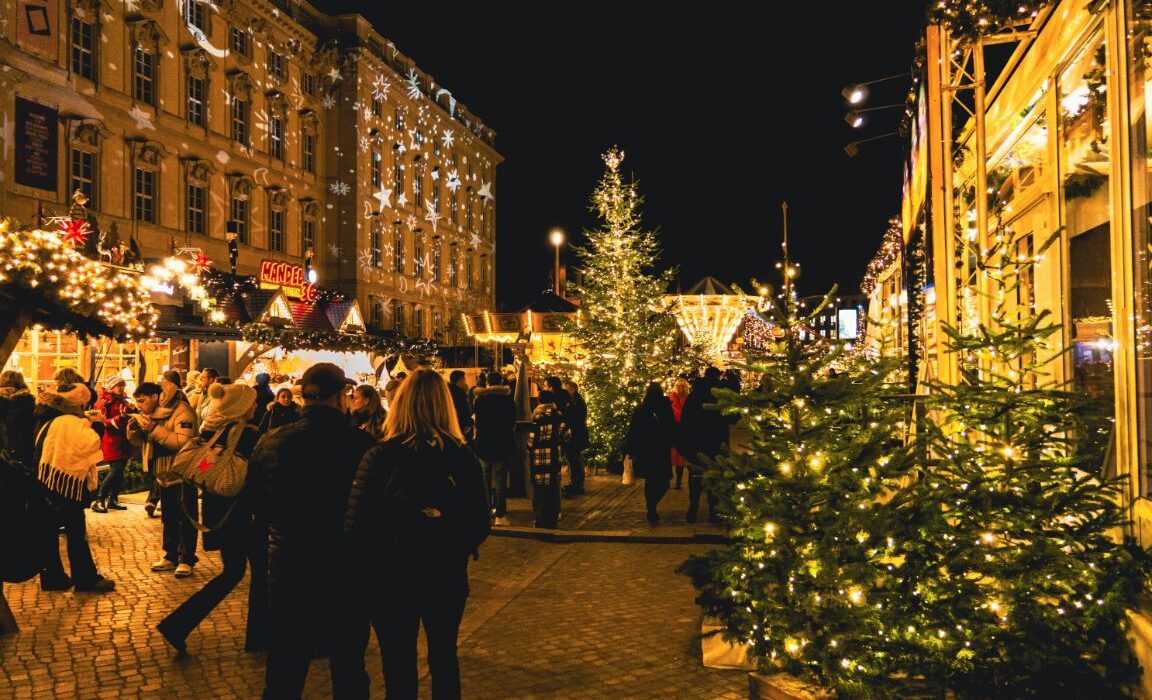
Europe invented the Christmas market and has had several centuries to perfect it. The originals in Germany and Austria, some of which have been running for over 600 years, set a standard that American versions aspire to and that genuinely rewards the trip to experience firsthand.
For American visitors, a European Christmas market trip in November or December is one of the most rewarding winter travel experiences available. The combination of centuries-old squares filled with handmade goods, mulled wine, and the kind of festive lighting that Europeans take seriously is difficult to recreate anywhere else in the world.
This guide covers the best Christmas markets in Europe for American visitors, along with practical advice for planning the trip.
Germany
Germany is the spiritual home of the Christmas market. The Weihnachtsmarkt tradition dates to the late Middle Ages in cities like Dresden and Nuremberg, and the country has hundreds of markets running across every region from late November through Christmas Eve. These are the ones worth building a trip around.
Nuremberg Christkindlesmarkt
Where: Nuremberg, Bavaria
When: Late November through Christmas Eve
Vibe: The original, historic, genuinely beautiful
Nuremberg’s Christkindlesmarkt is the most famous Christmas market in the world and has been running since at least 1628. It fills the Hauptmarkt, the city’s medieval main square, with around 180 stalls selling traditional Nuremberg goods including the famous Lebkuchen gingerbread, handmade ornaments, tin figures, and Zwetschgenmännle (little figures made from prunes and figs that are a Nuremberg tradition).
The market opens each year with a procession and a speech from the Christkind, the angelic figure traditionally associated with gift-giving in the region. The atmosphere in the medieval square, surrounded by centuries-old buildings and lit by thousands of lights, is about as close as you can get to the Christmas market ideal.
What to eat: Nuremberg Rostbratwurst, served three to a roll with mustard. Lebkuchen. Gluhwein in a collectible mug. This is non-negotiable.
Practical note: Nuremberg is compact and very walkable. Two nights is the right amount of time, allowing one full day at the market and time to explore the city’s medieval old town.
Cologne Christmas Markets
Where: Cologne, North Rhine-Westphalia
When: Late November through Christmas Eve
Vibe: Multiple markets, spectacular Cathedral backdrop, excellent food
Cologne runs seven distinct Christmas markets across the city, each with its own character and focus. The most famous is the one directly in front of Cologne Cathedral, one of the great Gothic buildings in Europe, which provides a backdrop so dramatic that photographs of it look almost fictional.
The Angels’ Christmas Market on Neumarkt and the Harbour Christmas Market on the Rhine are among the other highlights. Cologne is also one of Germany’s great food cities, which lifts the market food quality above the average. The Rhineland’s take on mulled wine, called Gluehwein or sometimes served as Heisser Apfelwein (hot apple wine), is worth trying alongside the standard versions.
Best for: First-time European Christmas market visitors who want scale, variety, and a genuine sense of occasion.
Dresden Striezelmarkt
Where: Dresden, Saxony
When: Late November through Christmas Eve
Vibe: The oldest market, Saxon tradition, famous Stollen
Dresden’s Striezelmarkt has been running since 1434, making it the oldest Christmas market in Germany. The market is famous for its giant advent calendar, its enormous Christmas pyramid, and above all for the Dresdner Stollen, the dense, buttered fruit bread that is one of the great traditional Christmas foods anywhere in the world.
The annual Stollen Festival in late November, where a giant Stollen is ceremonially cut and distributed, is one of the more unusual Christmas market traditions you will find anywhere. Dresden itself, rebuilt after wartime destruction, is a remarkable city that rewards several days of exploration beyond the market.
Hamburg Christmas Markets
Where: Hamburg, northern Germany
When: Late November through December 23rd
Vibe: Harbour city character, multiple markets, strong food scene
Hamburg runs several Christmas markets across the city, with the Roncalliplatz market beside the city hall and the Santa Pauli market in the Reeperbahn area being the most distinctive. The city’s port character and northern European influences give Hamburg’s markets a slightly different atmosphere from Bavarian originals, with more Scandinavian elements and a livelier evening energy in the bar-heavy neighbourhoods.
Austria
Austria’s Christmas market tradition runs closely parallel to Germany’s and in several cases surpasses it for atmosphere. Vienna in particular offers a Christmas market experience that is difficult to find anywhere else in the world.
Vienna Christmas Markets
Where: Vienna
When: Mid-November through December 26th
Vibe: Imperial grandeur, multiple locations, exceptional atmosphere
Vienna runs around twenty Christmas markets across the city, and several of them are among the best in the world. The Rathausmarkt in front of the neo-Gothic City Hall is the largest and most famous, an enormous market spread across the plaza in front of a building that is extravagantly lit for the season. The Schonbrunn Palace market is more intimate and arguably more beautiful, set in the courtyard of the Habsburg summer palace. The Belvedere Palace market and the Spittelberg market in the 7th district each have their own distinct character.
Vienna’s Christmas market food reflects Austrian cuisine’s strengths. Kaiserschmarrn, Topfenstrudel, roasted chestnuts, and the Austrian version of Gluhwein called Punsch are all worth prioritising. The city’s exceptional coffee house culture means warming up between market visits in a Viennese Kaffeehaus is a built-in part of the experience.
Best for: Anyone who wants the grandest possible Christmas market setting. Vienna at Christmas is one of the most beautiful cities in the world.
Plan for: At least three nights to do the main markets justice while also experiencing the city itself.
Salzburg Christmas Markets
Where: Salzburg
When: Late November through December 26th
Vibe: Baroque city, Mozart connection, genuinely intimate
Salzburg’s Christmas market in the Domplatz, the cathedral square of the old city, is one of the most beautiful market settings in Europe. The Baroque cathedral behind the stalls, the narrow medieval streets surrounding the square, and the Hohensalzburg Fortress lit up on the hill above all combine into a setting that genuinely delivers on the Christmas market promise.
Salzburg is smaller than Vienna and the market reflects that, which works in its favour. It is intimate in a way that the enormous Vienna markets cannot be, and the city is compact enough to walk everywhere easily. The connection to Mozart, the Christmas concerts in the cathedral, and the Sound of Music tourism combine to make Salzburg one of the most reliably festive cities in Europe in December.
France
Alsace, the region of northeastern France that borders Germany and spent significant periods as part of it historically, has Christmas market traditions that rival any in the German-speaking world. Strasbourg in particular makes a serious claim to being the best Christmas market city in Europe.
Strasbourg Christkindelsmaerik
Where: Strasbourg, Alsace
When: Late November through December 24th
Vibe: The oldest market in France, beautiful old city, exceptional food
Strasbourg’s Christmas market has been running since 1570 and calls itself the Capital of Christmas, a title it defends convincingly. The market spreads across twelve sites throughout the medieval old city, with the main market in the Place Broglie and the Cathedral square as the two focal points.
The Alsatian food is the standout element. Bredele, the small butter cookies traditional to the region. Tarte flambee, the Alsatian flatbread with cream, onion, and bacon. Kouglof, the regional brioche. Choucroute. Foie gras on everything. The combination of French culinary seriousness and German Christmas market tradition produces food that is genuinely better than at most other markets.
The medieval half-timbered city around the market, lit magnificently for the season, adds an atmosphere that even Nuremberg and Vienna struggle to match.
Best for: Food lovers, anyone who wants the best combination of food, atmosphere, and architectural beauty in one place.
Colmar Christmas Market
Where: Colmar, Alsace
When: Late November through late December
Vibe: Fairy-tale setting, less crowded than Strasbourg, beautiful
Colmar is a small Alsatian city an hour south of Strasbourg that many people consider even more beautiful than its larger neighbour. The Christmas markets are spread across several squares in an old town of extraordinary half-timbered buildings reflected in the canals of the Petite Venise district. The scale is more manageable than Strasbourg and the crowds thinner, making it easier to actually enjoy the stalls at a relaxed pace.
Many visitors combine Strasbourg and Colmar in a single Alsace Christmas trip, which is highly recommended. The train between the two cities takes around 25 minutes.
Czech Republic
Prague Christmas Markets
Where: Prague
When: Late November through early January
Vibe: Spectacular setting, excellent value, atmospheric old city
Prague’s Old Town Square Christmas market, set around the Gothic Tyn Church and the medieval astronomical clock, is one of the most photographed Christmas market settings in the world. The square fills with wooden stalls selling traditional Czech crafts, food, and warm drinks against a backdrop of some of the most beautiful medieval architecture in Europe.
Prague’s practical advantage over Germany and Austria is cost. Food, drinks, accommodation, and transport are all significantly cheaper than in German or Austrian cities, making it one of the best value Christmas market destinations in Europe for American visitors. The Czech food and drink programme, including trdelnik (the chimney cake popular at Czech markets), svarak (mulled wine), and roast meat dishes, has its own distinct character worth exploring.
Best for: Budget-conscious travellers, first-time European visitors, anyone who wants spectacular architecture at lower cost.
Other Notable Markets
Brussels, Belgium: The Winter Wonders market in the Grand Place, one of the most beautiful city squares in the world, is worth knowing about. The Belgian chocolate and waffle context makes the food element particularly strong.
Edinburgh, Scotland: Edinburgh’s German Christmas Market on Princes Street is one of the largest in the UK and benefits from one of the most dramatic city settings anywhere, with the castle on its volcanic rock as the backdrop.
Copenhagen, Denmark: Tivoli Gardens runs a famous Christmas market that combines the park’s year-round charm with seasonal decoration and Scandinavian Christmas food traditions, including glogg (the Danish version of mulled wine) and aebleskiver (round pancake balls served with jam).
Planning Your Trip
When to go: The first two weeks of December offer the best balance of full market programming, manageable crowds, and reasonable accommodation prices. The final week before Christmas, while atmospheric, brings the highest prices and largest crowds of the season. Late November catches the markets early and avoids most of the peak-season pricing.
How long to spend: One city works well for a long weekend of three to four nights. A two-city trip combining, for example, Nuremberg and Salzburg, or Strasbourg and Colmar, works well in five to six days. A full Christmas market circuit of three cities needs at least eight days to do properly without feeling rushed.
Getting between markets: European train connections between major Christmas market cities are excellent. Nuremberg to Salzburg is under two hours by fast train. Strasbourg to Colmar is 25 minutes. Vienna to Salzburg is under three hours. Flying between cities is almost always slower and more expensive than taking the train once you account for airport time.
Accommodation: Book four to six months in advance for stays in the first two weeks of December and three months out for late November. Good hotels in Vienna, Nuremberg, and Salzburg fill up early for Christmas market season. Consider apartments or vacation rentals for longer stays, which also give you a kitchen for breakfast and late-night snacks after market evenings.
What to Wear
European Christmas markets are outdoor events in late November and December. In Germany, Austria, and Alsace, temperatures typically range from around 25 to 45 degrees Fahrenheit through the market season. Prague runs similarly cold. Edinburgh and Copenhagen are milder but wet.
The practical wardrobe needs are straightforward. A genuinely warm, waterproof outer layer. Warm mid-layers you can add or remove as you move between outdoor stalls and heated tents and indoor restaurants. Waterproof boots with warm lining, because European Christmas markets involve standing on cobblestones for extended periods. Gloves that you can actually use your phone through, or a willingness to take them off frequently for photographs. A hat.
The European Christmas market crowd dresses for warmth rather than fashion, and American visitors should follow that lead. You will enjoy the markets significantly more in the right clothing than you will in a photogenic outfit that leaves you cold by the second Gluhwein.
What to Buy
The best purchases at European Christmas markets are regionally specific things that you genuinely cannot buy at home.
Handmade ornaments: German hand-blown glass ornaments, wooden Erzgebirge decorations from Saxony, and Nuremberg tin figures are the classic Christmas market purchases. Buy from stalls that are clearly selling handmade items rather than imported mass production.
Food to bring home: Lebkuchen travels well and keeps for weeks. Stollen from Dresden is worth buying carefully packed for the journey home. Alsatian wines and local schnapps make excellent gifts. Czech glass and crystal are well-priced in Prague compared to anywhere else.
The mug: Most markets sell their Gluhwein in collectible ceramic mugs with a deposit that you can reclaim or keep. Keep the mug. It is one of the most practical and genuine souvenirs you can bring home from any Christmas market trip.
Frequently Asked Questions
Which is the best European Christmas market for first-time visitors?
Cologne is the most practical first choice for Americans flying directly from major US cities, as it has direct transatlantic connections and multiple excellent markets. For pure atmosphere, Strasbourg is hard to beat. For the most famous market in the world, Nuremberg. Vienna is the right choice if you want to combine a great city trip with outstanding Christmas markets.
How much does a European Christmas market trip cost?
Budget around 150 to 250 dollars per person per day for accommodation, food, transport, and market spending in Germany or Austria. Prague runs 30 to 40 percent cheaper. A four-night trip to one German city with reasonable accommodation costs around 1,500 to 2,000 dollars per person including flights from the East Coast, less from the Midwest where German carrier connections are strong.
Do I need to speak German to enjoy Christmas markets in Germany and Austria?
No. English is widely spoken across all major German and Austrian Christmas market cities, and market vendors are accustomed to international visitors. Menu items and stall descriptions are often in German but the visual nature of market shopping means you can navigate almost entirely without language. Basic German phrases for ordering and thanking are appreciated but by no means required.
Is it safe to visit European Christmas markets?
Yes. The security measures introduced at major European Christmas markets after incidents in the 2010s are now standard, and major markets including Nuremberg, Cologne, and Vienna have vehicle barriers, bag checks at entrances, and significant security presence. The markets themselves are busy, well-lit public spaces in city centres that are heavily policed during the market season.
When do European Christmas markets open and close each day?
Most markets open between 10am and 11am and close between 8pm and 9pm, with some extending to 10pm on weekends. The atmosphere is best in the early evening after dark, roughly 4pm to 7pm, when the lights are fully on and the crowds have arrived but the market is not yet at its peak density. Morning visits offer the calmest browsing but lose some of the magic that darkness and illumination provide.